Dr. Chettasak’s Non-Penile Inversion (NPI) Technique

Natural Feminine Appearance. Preserved Sexual Sensation.

With more than 30 years of experience in gender-affirming surgery, Dr. Chettasak Tulayaphanich (Dr. Chet), formerly known as Dr. Chettawut Tulayaphanich, has dedicated his career to refining both the appearance and sexual function of reconstructed female genitalia.

His Non-Penile Inversion (NPI) Surgical Design reflects this commitment, bringing together meticulous anatomical reconstruction, thoughtful tissue selection, and careful preservation of sensitive structures.

Unlike conventional penile inversion, NPI reserves penile and preputial skin for external genital reconstruction while using separately selected tissue to create the vaginal lining.

This page takes a closer look at how Dr. Chet uses each part of the available genital tissue to reconstruct natural feminine anatomy while protecting the potential for sexual sensation.

The Surgical Art Behind Dr. Chettasak’s NPI Design

Creating a natural-looking vulva requires more than reconstructing individual anatomical structures. The surgeon must consider how they fit together, from the delicate folds of the labia minora and clitoral hood to the shape of the vaginal opening and posterior fourchette.

Each structure requires a different approach. Thin, flexible tissue is needed for delicate folds, while other areas require sufficient volume, healthy circulation, and carefully controlled tension.

Dr. Chet approaches NPI reconstruction as a coordinated anatomical design. Rather than shaping each structure independently, he considers its relationship to the surrounding tissues, aiming for natural proportions, balanced contours, and preservation of sensitive anatomy.

The challenge lies in working with the tissue available in each patient. Even small differences in tissue thickness, positioning, or tension can influence the final appearance.

For Dr. Chet, the precision of NPI lies in how these delicate structures are brought together to create a natural and harmonious feminine appearance.

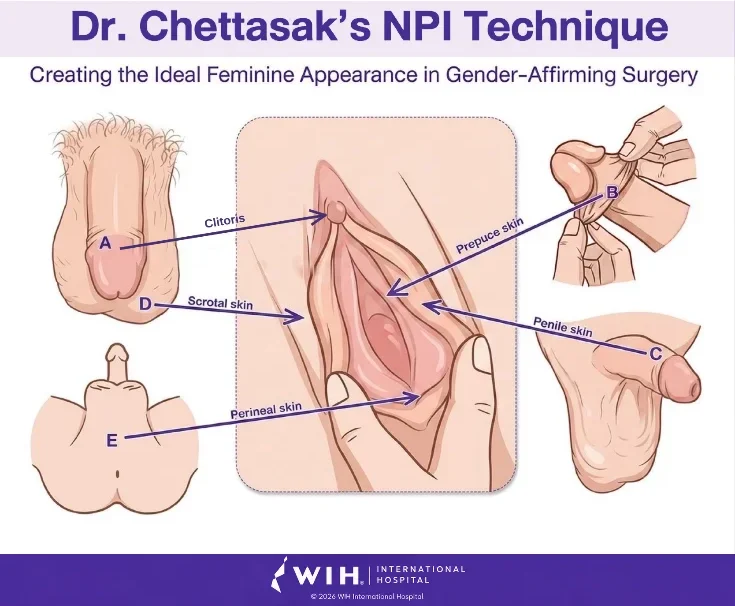
Medical illustration of Dr. Chettasak’s NPI vaginoplasty technique at WIH International Hospital.

How the NPI Technique Uses Each Part of the Genital Tissue

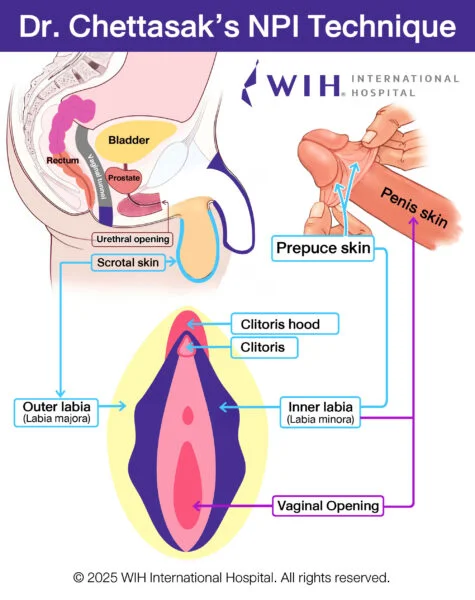
The NPI design makes careful use of five main tissue sources, each contributing to a different part of the reconstructed female genital anatomy.

A — Glans Tissue: Primary and Secondary Clitoris
The dorsal portion of the glans is used to reconstruct the Primary Clitoris, while a selected portion of the coronal ridge forms the Secondary Clitoris, an additional sensate structure that bridges the Primary Clitoris and the urethral flap.

B — Prepuce Skin
The thin, flexible preputial skin is carefully shaped to reconstruct the labia minora, clitoral hood, and other delicate structures surrounding the clitoris, creating natural contours and well-defined feminine anatomy.

C — Penile Skin
The penile skin is positioned vertically to help form the external vulvar contour and a natural V-shaped vaginal opening.

D — Scrotal Skin
Scrotal skin and underlying tissue contribute to the volume, shape, and coverage of the labia majora.

E — Perineal Skin
Perineal tissue contributes to the lower vaginal entrance and the reconstruction of the posterior fourchette.

Each tissue source is selected and positioned according to its anatomical characteristics, available volume, blood supply, and relationship to the surrounding structures.

The following sections explain how these elements work together to support the two central goals of NPI reconstruction: preserving sexual sensation and creating natural feminine anatomy.

Preserving Sexual Sensation

For many patients considering gender-affirming surgery, preserving sexual sensation is just as important as achieving a natural feminine appearance.

Sexual sensation involves more than a single anatomical structure. It depends on the delicate network of nerves, blood vessels, and sensitive tissues that must be carefully preserved and repositioned during genital reconstruction.

Dr. Chet’s NPI technique approaches sensation preservation as an essential part of surgical design, rather than something considered after the external appearance has been created.

Primary and Secondary Clitoral Reconstruction

One distinctive feature of Dr. Chet’s NPI design is the reconstruction of two interconnected sensate structures using different portions of the glans penis.

The Primary Clitoris is created from the dorsal portion of the glans, preserving its neurovascular supply while shaping it into an appropriately sized and positioned neoclitoris.

The Secondary Clitoris is formed from a selected portion of the coronal ridge of the glans. This additional sensate tissue creates a bridge between the Primary Clitoris and the urethral flap.

Rather than allowing this sensitive tissue to be discarded during reconstruction, Dr. Chet incorporates it into the external genital design to preserve an additional area with the potential for erotic sensation.

The terms Primary and Secondary Clitoris describe two interconnected sensate structures within Dr. Chet’s NPI technique, rather than two separate clitoral organs in standard female anatomy.

The goal is to preserve as much viable, sensitive tissue as possible while maintaining appropriate anatomical positioning, blood supply, and a natural external appearance.

Preserving the Sensory Nerve Network and Blood Supply

Preserving sexual sensation requires a thorough understanding of the intricate network of nerves and blood vessels within the original genital tissue.

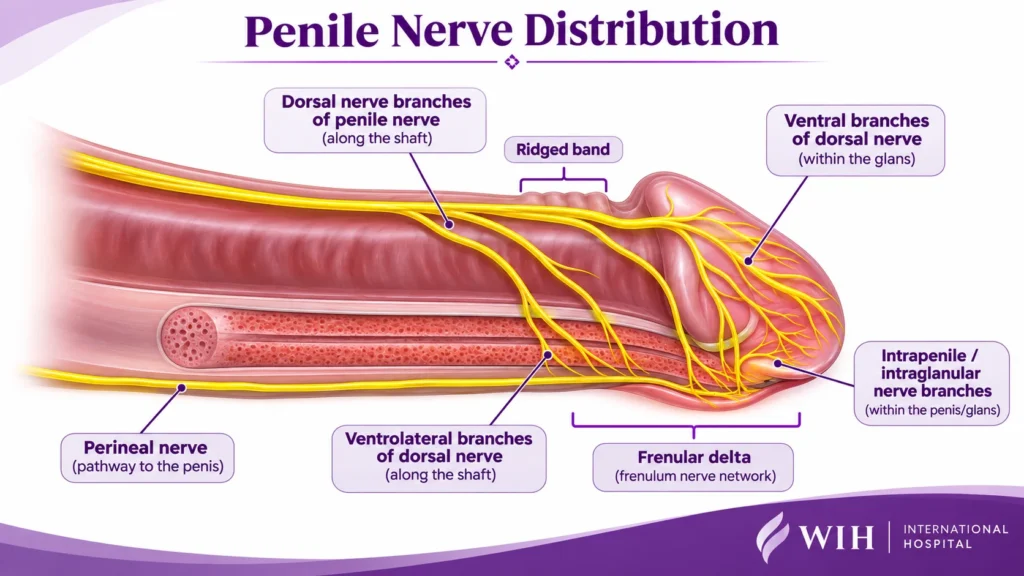
The dorsal nerves of the penis, branches of the pudendal nerves, provide important sensory pathways to the glans and surrounding genital structures. During clitoral reconstruction, Dr. Chet meticulously creates and preserves the neurovascular pedicle that carries the essential nerves and blood supply to the reconstructed clitoral tissue.

His NPI design aims to preserve not only the Primary and Secondary Clitoris, but also the sensitive preputial tissue used to create the clitoral hood, frenulum, and inner surfaces of the labia minora. These structures are carefully reconstructed to retain viable sensory tissue while maintaining healthy circulation and natural anatomical relationships.

The challenge is to protect these delicate nerve pathways and their blood supply while reshaping the tissue into natural feminine anatomy. This requires precise dissection, careful tissue positioning, and meticulous control of tension throughout the reconstruction.


Sensory nerve preservation during gender affirming surgery

For Dr. Chet, preserving sensation means protecting an interconnected sensory system—not simply creating a sensate clitoris.

Deep Vaginal Sensation and Prostate Stimulation

Sexual pleasure after vaginoplasty is not limited to clitoral stimulation. Some patients also experience pleasurable sensations from deeper stimulation during vaginal penetration.

In gender-affirming vaginoplasty, the prostate is generally preserved and lies just in front of the newly created vaginal canal. Stimulation through the anterior vaginal wall may indirectly stimulate the prostate and surrounding sensitive tissues, potentially contributing to deep sexual pleasure and orgasm in some patients.

This region is sometimes described as a G-spot-like sensory area, although its anatomy and sexual response are not identical to the G-spot concept in cisgender women.

By considering both external genital sensation and the anatomy surrounding the vaginal canal, Dr. Chet’s surgical planning aims to support a broader range of pleasurable sexual experiences after recovery.

Sexual Sensation and Orgasm After NPI Surgery

Preserving sexual pleasure is one of the defining priorities of Dr. Chet’s NPI technique.

For Dr. Chet, successful gender-affirming surgery is not only about creating natural feminine anatomy. It is also about preserving the ability to enjoy sexual stimulation, experience intimate pleasure, and achieve orgasm after recovery.

His approach places particular emphasis on preserving sensitive genital tissue, including the Primary and Secondary Clitoral structures, while carefully protecting their nerves and blood supply.

Based on Dr. Chet’s clinical experience, a high proportion of patients regain pleasurable sexual sensation and the ability to achieve orgasm after surgery, with many reporting orgasmic function within the first several months of recovery.

This reflects an important goal of NPI reconstruction: to preserve not only the appearance of feminine genital anatomy, but also its capacity for sexual pleasure.

Although sensation and orgasmic recovery vary among individuals, Dr. Chet’s meticulous attention to sensitive tissue preservation is central to achieving these functional outcomes.

Creating Natural Feminine Anatomy

A natural feminine appearance is not determined by a single feature. It comes from the relationship between several delicate structures, each with its own shape, position, and proportion.

For Dr. Chet, reconstructing the vulva means considering how the labia minora, labia majora, clitoral complex, urethral opening, vaginal entrance, and posterior fourchette come together as one coordinated anatomical design.

Even small differences in tissue placement or tension can change the overall appearance.


Dr.-Chettasaks-NPI-Technique-for-gender-affirming-surgery

Labia Minora — Recreating Delicate Feminine Folds

The labia minora are among the most challenging structures to reconstruct because they require thin, flexible tissue and careful shaping to achieve natural definition.

In the NPI technique, Dr. Chet preferentially uses the preputial skin, which is naturally delicate and pliable, to form the inner labial folds.

Rather than simply creating two strips of skin beside the vaginal opening, he carefully considers their shape, contour, relationship to the clitoral hood, and transition toward the lower vulva.

The objective is to recreate recognizable feminine labial anatomy with well-defined borders and balanced proportions.

The final size and symmetry of the labia minora depend on the amount and quality of available preputial tissue, especially in patients who have undergone circumcision.

Labia Majora — Natural Contour, Skin Tension, and Scar Concealment

The labia majora form the soft outer contours of the vulva, giving the external genitalia their natural shape and feminine proportions.

In Dr. Chet’s NPI design, scrotal skin is carefully repositioned with controlled skin tension, while preserving the underlying subcutaneous fat to create smooth, well-defined outer labia with natural fullness.

Particular attention is given to shaping the lower ends of the labia majora so they taper gently inward toward the vaginal opening, rather than appearing wide or separated.

Incision placement is equally important. Dr. Chet carefully positions the surgical scars within natural skin creases, avoiding excessive lateral placement toward the groin, to make them less noticeable as healing progresses.

The goal is to create smooth, naturally contoured labia majora with balanced fullness, appropriate skin tension, and discreetly positioned scars.

Vulvar Vestibule and Urethral Opening — Natural Appearance and Functional Design

The vulvar vestibule is the delicate area between the labia minora, characterized by its naturally pink appearance and specialized tissue surrounding the clitoris, urethral opening, and vaginal entrance.

In Dr. Chet’s NPI design, the upper vestibule incorporates the Secondary Clitoris, a sensitive structure reconstructed from the coronal ridge of the glans. The lower vestibule is formed using a carefully preserved urethral flap, creating a smooth, natural transition toward the vaginal opening.

Particular attention is given to removing excess erectile tissue (corpus spongiosum) around the urethra to prevent unwanted bulging during sexual arousal, while preserving healthy urethral mucosa and surrounding tissue that may contribute to clear secretions during arousal.

The urethral opening is carefully positioned above the vaginal introitus. An anterior urethral flap is preserved and incorporated into the reconstruction, providing additional tissue support around the urethral opening and helping reduce the risk of postoperative contraction and narrowing (meatal stenosis).


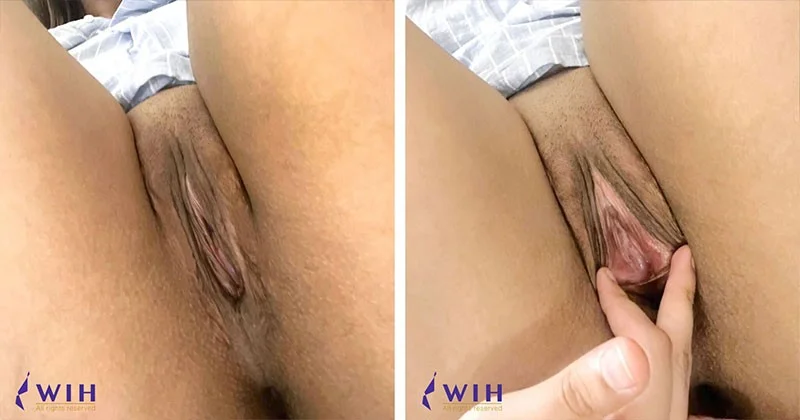
Natural feminine genital anatomy after gender-affirming vaginoplasty at WIH International Hospital.

The goal is to recreate a natural-looking pink vestibule with preserved sensitivity, a well-positioned urethral opening, and reliable urinary function.

This case shows how the NPI technique focuses on a natural feminine appearance, anatomical precision, and preserved sexual sensation. Individual results vary.

Surgery by Dr. Chettasak Tulayaphanich · WIH International Hospital

More Photos

The V-Shaped Vaginal Opening — A Defining Feature of NPI

One of the distinctive features of Dr. Chet’s NPI design is the vertical arrangement of penile skin to create a naturally contoured, V-shaped vaginal opening.

Beyond skin positioning, careful shaping and distribution of the underlying fatty tissue play an essential role in creating a soft, smooth transition between the surrounding vulvar structures and the vaginal entrance.

Dr. Chet meticulously adjusts the subcutaneous tissue beneath the penile skin flap to provide gentle fullness and natural contours, avoiding a hollow or sunken appearance around the vaginal opening.

Equally important is the anatomical positioning of the vaginal entrance. The posterior border of the vaginal opening is carefully positioned in relation to the anus, with a surgical goal of approximately 2 cm from the anterior anal margin, when anatomically appropriate. This helps create a well-proportioned perineum and avoids an unnaturally elongated distance between the vaginal opening and anus.

By balancing skin tension, underlying tissue volume, vaginal opening position, and anatomical proportions, Dr. Chet aims to create a soft, naturally defined V-shaped entrance while maintaining sufficient width for vaginal function and postoperative dilation.

The goal is a vaginal opening that blends naturally with the surrounding vulva, without a hollow appearance or an excessively long perineum.

Posterior Fourchette — Completing the Natural Vulvar Contour

The posterior fourchette is a delicate fold at the lower vaginal entrance, where the labia minora naturally meet to complete the feminine vulvar contour.

In gender-affirming surgery, the available labia minora tissue may not always be long enough to extend downward and form a well-defined posterior fourchette. This anatomical limitation makes careful reconstruction particularly important.

In Dr. Chet’s NPI design, the shape and width of the perineal flap base play an essential role. By carefully narrowing and shaping the base into a gentle V-shaped fold, he aims to recreate the natural convergence of the lower vulvar structures, even when the reconstructed labia minora cannot fully meet.

This approach helps create a smooth transition between the vaginal opening and perineum, while maintaining appropriate tissue tension and supporting healthy wound healing.

The goal is to achieve a naturally defined posterior fourchette through thoughtful perineal flap design, rather than relying solely on the length of the labia minora

Plan Your Surgery at WIH

Discuss your surgical goals, explore your options, and receive personalized guidance from the WIH team

Send Us an Email - info@wihhospital.com Chat on WhatsApp: +66 95 650 3892

NPI for Circumcised Patients and Limited Genital Tissue

Previous circumcision is common among Dr. Chet’s patients and often leaves less preputial skin available for labia minora reconstruction. The remaining usable prepuce is typically found between the coronal ridge of the glans and the circumcision scar.

Fortunately, natural labia minora vary widely in size and shape among cisgender women. Even when only a small amount of preputial skin remains, Dr. Chet can carefully shape the available tissue to create delicate, well-proportioned labia minora that complement the overall vulvar appearance.

The goal is not to create large labia minora, but to achieve a natural, balanced feminine appearance with the tissue available.

NPI and Your Choice of Vaginoplasty

One of the key advantages of Dr. Chet’s NPI technique is that external genital reconstruction is designed independently of the method used to create the vaginal canal.

Whether a patient chooses Skin Graft Vaginoplasty, Hybrid PPV Vaginoplasty, or Laparoscopic Colon Vaginoplasty, the external vulvar appearance is shaped using the same NPI principles, focusing on natural feminine contours, anatomical proportions, and preservation of sexual sensation.

For patients who prefer not to have a vaginal canal, these external design principles also apply to NPI Zero-Depth Vaginoplasty.

Your choice of vaginal lining determines how the vaginal canal is created—not the fundamental NPI design of your external genitalia.

Explore Your Vaginoplasty Options: Skin Graft | Hybrid PPV | Colon | Zero-Depth

Understanding NPI Results — From Surgical Design to Healing

A successful NPI reconstruction begins with meticulous surgical design, but the final appearance and sensation also depend on individual anatomy, available tissue, and postoperative healing.

As swelling subsides and tissues mature, the reconstructed vulva gradually develops its final contours. At WIH, Dr. Chet and his medical team provide close postoperative care and guidance to support healing and long-term results.

Every patient’s anatomy and recovery are unique. The goal is a natural feminine appearance, preserved sexual sensation, and lasting functional results.

Learn About NPI with Dr. Chettasak

Discover the surgical principles behind Dr. Chet’s NPI technique through short educational videos, where he explains how natural feminine anatomy is reconstructed and how sexual sensation is preserved.

Explore NPI Surgical Results and Patient Experiences

Frequently Asked Questions About Dr. Chettasak’s NPI Technique

NPI describes Dr. Chet’s approach to external genital reconstruction rather than the tissue used to line the vaginal canal. It can be combined with Skin Graft, Hybrid PPV, or Colon Vaginoplasty, or used for external reconstruction in Zero-Depth Vaginoplasty.

The Primary Clitoris is reconstructed from the dorsal portion of the glans, while the Secondary Clitoris uses selected coronal ridge tissue to create an additional sensate structure between the Primary Clitoris and the urethral flap. Both are incorporated into Dr. Chet’s design to preserve sensitive tissue.

Yes, circumcision does not automatically prevent NPI reconstruction. However, reduced preputial tissue can affect the size and definition of the reconstructed labia minora. Dr. Chet will assess the available tissue and discuss the expected design during consultation.

NPI uses carefully selected genital tissues to reconstruct the clitoral complex, labia, urethral region, vaginal opening, and posterior fourchette. Particular attention is given to tissue positioning, contour, and anatomical proportions.

NPI prioritizes preservation of the nerves, blood supply, and sensitive genital tissues. Many patients retain sexual sensation and may experience orgasm after recovery, although individual results vary and cannot be guaranteed.

No. NPI is an individualized surgical design. The final appearance depends on available tissue, anatomy, previous surgery, healing, and postoperative care. Clinical photographs illustrate individual outcomes rather than guaranteed results.

Consult Dr. Chettasak About NPI Surgery

Every patient has different anatomy, expectations, and surgical goals.

A personalized consultation with Dr. Chet allows the surgical team to evaluate your available genital tissue, previous circumcision or surgery, desired appearance, sexual function, and medical condition before recommending an appropriate approach.

Contact WIH International Hospital

Send Us an Email - info@wihhospital.com Chat on WhatsApp: +66 95 650 3892

Explore Gender-Affirming Surgery at WIH