Gender-Affirming Surgery for Transgender Women in Thailand

Designed for a natural appearance, functional depth, and preserved sexual sensation, with a surgical plan built around you and full support through your recovery.

Every body is different, and so is every goal. Before surgery, Dr. Chettasak Tulayaphanich, known to his patients as Dr. Chet, looks at your anatomy and the tissue you have, asks how you hope to use your vagina, and reviews your general health and how ready you are for the care that follows surgery. Together, you then choose the technique and recovery plan that fit you best.

What Defines a Satisfactory Outcome?

A good result is about more than appearance. Dr. Chet plans for three goals at once: a natural external appearance, sexual function, and sexual sensation.

1. Natural External Appearance

Appearance is the first thing you will see, so the surgery aims to recreate the shape and proportions of natural female anatomy: well-defined labia minora, a clitoris and clitoral hood in proportion, and a naturally shaped vaginal opening. Your final appearance also depends on your anatomy, the tissue available, and how your body heals.

2. Sexual Function

If you want penetrative sex, your new vagina needs enough depth and width, with a healthy, stable lining, so penetration can be comfortable. The lining can be made from a skin graft, peritoneal tissue, or colon. Dr. Chet will help you choose based on your anatomy, your goals, and how well you can keep up with dilation after surgery.

3. Erotic Sensation

Sensation is often one of the biggest concerns. Dr. Chet builds the clitoris and other sensitive structures with great care, protecting the nerves and blood supply that keep them alive and responsive. Sensation returns differently for everyone and may keep improving over time.

A good outcome is never about appearance, depth, or sensation alone. All three are planned together from the very first consultation.

Understanding NPI: The Art and Precision of External Genital Reconstruction

Creating a natural-looking female genital appearance is one of the most delicate and challenging parts of gender-affirming surgery. The surgeon must work with a limited amount of existing tissue to reconstruct intricate structures, including the labia minora, vaginal opening, and posterior fourchette.

Every piece of tissue matters. Its thickness, flexibility, blood supply, and positioning influence the final appearance.

For Dr. Chet, the goal is not simply to create a vaginal opening, but to carefully reconstruct the delicate anatomy of a natural feminine vulva.

The Limitations of Traditional Penile Inversion

In conventional penile inversion vaginoplasty, the penile skin must serve two purposes: constructing the external genital structures and lining the vaginal canal. Much of the penile skin is turned inward, leaving less tissue available for shaping the external vulva.

This inward pull can limit the surgeon’s freedom to create a natural external contour. In some cases, the upper part of the vaginal opening may appear bulky or bunched, while the sides may look wider or less clearly defined.

Although outcomes vary with surgical technique and individual anatomy, using the same penile skin for both internal lining and external reconstruction creates a fundamental tissue-allocation challenge.

The WIH NPI Surgical Design: Precision Matters, Especially When Tissue Is Limited

Dr. Chet developed his Non-Penile Inversion (NPI) Surgical Design around a different principle: preserve the penile and preputial skin for external genital reconstruction while creating the vaginal lining separately.

Instead of turning penile skin inward, he carefully uses the delicate preputial skin to form well-defined labia minora and positions the penile skin vertically to create a smooth vulvar contour, a natural V-shaped vaginal opening, and the posterior fourchette.

Without the inward pull of penile inversion, the surgeon has greater freedom to control tissue positioning, tension, and anatomical proportions.

This becomes particularly valuable when penile or scrotal skin is limited, as may occur after circumcision or because of individual anatomy. By reserving penile skin for the external reconstruction, NPI allows the surgeon to make more effective use of the available tissue without sacrificing it to line the vaginal canal.

The strength of NPI lies in its meticulous external design and flexible use of available tissue, even in anatomically challenging cases. The final result still depends on individual anatomy, tissue availability, and healing.

Explore Dr. Chettasak’s NPI Surgical Design

NPI Surgical Design for MTF Gender-Affirming Surgery

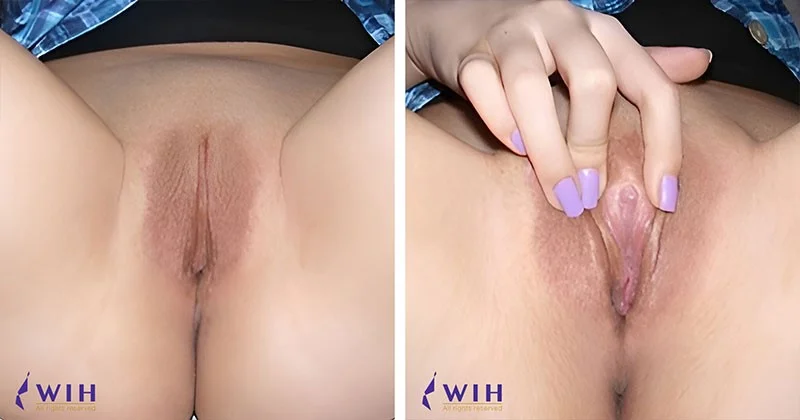
Dr. Chettasak’s NPI Surgical Design for MTF Gender-Affirming Surgery

This case shows how the NPI technique focuses on a natural feminine appearance, anatomical precision, and preserved sexual sensation. Individual results vary.

Surgery by Dr. Chettasak Tulayaphanich · WIH International Hospital

Choosing Your Vaginal Lining: Three Options, One NPI Design

With Dr. Chet’s NPI technique, the external genital appearance and the vaginal canal are designed separately, giving him greater freedom to shape each part according to its purpose.
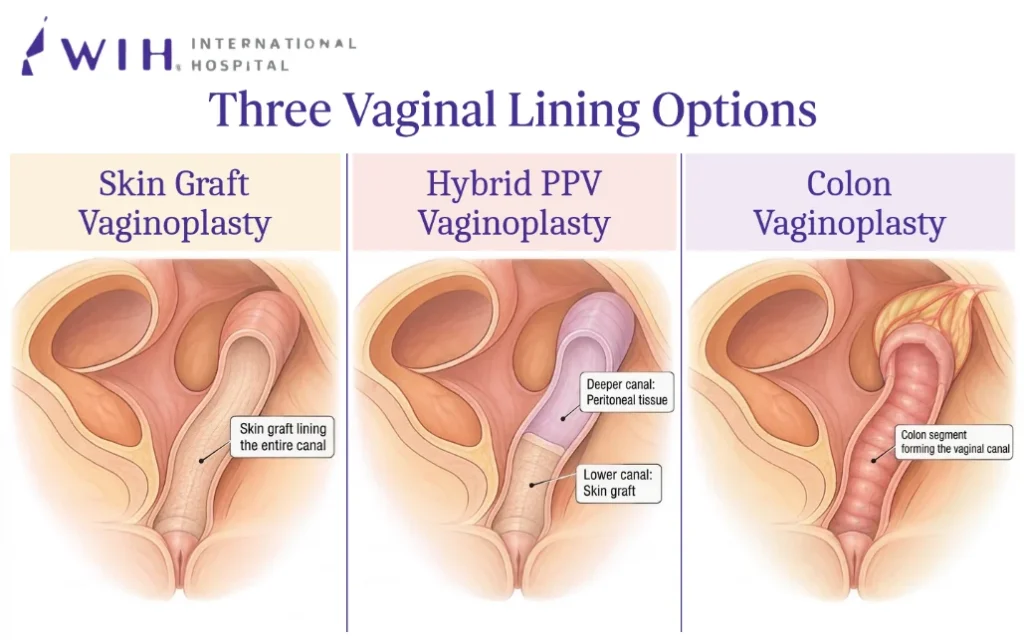
While the external reconstruction follows the same NPI principles, the vaginal canal can be created using three different types of tissue: skin graft, peritoneum, or colon.

Each has its own characteristics, particularly in vaginal depth, natural moisture, and surgical complexity. Dr. Chet will help you understand these differences and choose the option that best matches your anatomy, expectations, and medical condition.

Three vaginoplasty options at WIH International Hospital, all sharing the same NPI external design

Skin Graft Vaginoplasty — A Simpler Approach Without Abdominal Surgery

Skin Graft Vaginoplasty creates the vaginal canal using a skin graft, commonly taken from scrotal skin. Because the procedure does not require abdominal surgery, it may appeal to patients who prefer a less complex surgical approach.

At WIH, the usual depth goal is 6 inches or more. As skin graft tissue does not naturally produce mucus, additional lubricant is generally needed for comfortable penetration.

This technique offers a well-established option for patients who understand the importance of regular postoperative dilation.

Explore Skin Graft Vaginoplasty

Hybrid PPV Vaginoplasty — Combining Skin Graft and Peritoneal Tissue

Hybrid PPV Vaginoplasty brings together two types of tissue. A skin graft forms the lower part of the vaginal canal, while peritoneal tissue from inside the abdomen lines the deeper portion.

The peritoneal lining may provide some natural moisture, although the amount varies between patients and additional lubricant may still be needed.

This technique requires laparoscopic abdominal surgery, with a usual WIH depth goal of 6.5 inches or more.

Explore Hybrid PPV Vaginoplasty


Colon Vaginoplasty — Greater Depth with a Mucus-Producing Lining

Colon Vaginoplasty uses a segment of the large intestine to create the vaginal canal. Unlike skin graft tissue, the colon lining naturally produces mucus, providing moisture that varies in amount and frequency from person to person.

With a usual depth goal of 7 inches or more, this technique may be considered by patients who prioritize greater vaginal depth and natural moisture.

Because the operation involves laparoscopic bowel surgery, Dr. Chet carefully evaluates each patient’s general health and bowel condition before recommending it.

Explore Colon Vaginoplasty

What If You Don’t Need a Vaginal Canal?

Not every patient wants or needs a vaginal canal for penetrative intercourse.

For those who prefer external genital reconstruction without vaginal depth, NPI Zero-Depth Vaginoplasty offers another option.

Dr. Chet applies the same NPI principles to create a natural feminine external appearance, but without constructing a vaginal canal. As a result, postoperative vaginal dilation is not required.

Explore NPI Zero-Depth Vaginoplasty


Understanding Your Expected Results

The depth figures mentioned above are surgical goals, not guaranteed outcomes. Final depth depends on your anatomy, available tissue, healing, and commitment to postoperative dilation.

Natural moisture also differs among techniques. Moisture produced by peritoneal or colon tissue is not the same as lubrication associated with sexual arousal, and additional lubricant may still be necessary.

There is no single technique that is best for everyone. The right choice is the one that balances your desired outcome with your anatomy, health, and long-term care needs.

Gender-affirming surgery, specialized hospital care, and your partnership at WIH International Hospital

Plan Your Surgery at WIH

Discuss your surgical goals, explore your options, and receive personalized guidance from the WIH team

Send Us an Email - info@wihhospital.com Chat on WhatsApp: +66 95 650 3892

A Great Outcome Is a Partnership

A successful outcome in gender-affirming surgery takes more than surgical skill alone. It comes from three partners working together: You, Dr. Chet, and the WIH team. Each plays an essential role in creating, protecting, and maintaining your results, from your first consultation through long-term recovery.

  • You — Understanding and Self-Care

Gender-affirming surgery can bring meaningful changes to your appearance and sexual function, but every result is influenced by your anatomy, available tissue, healing, and postoperative care. Before making your decision, it is important to understand the goals, limitations, risks, and recovery requirements of your chosen procedure. Your results may differ from another patient’s photographs, and no specific appearance, vaginal depth, sensation, or healing outcome can be guaranteed.

Your commitment is equally important. Providing an accurate medical history, following preoperative instructions, caring for your wounds, maintaining regular vaginal dilation, respecting activity restrictions, and attending follow-up appointments all contribute to a successful recovery. Consistent self-care is essential to preserving your vaginal depth and long-term surgical results.

  • Dr. Chet — Experience, Innovation, and Surgical Dedication

With over 30 years of experience in transgender surgery, Dr. Chettasak Tulayaphanich (Dr. Chet) has dedicated his career to improving the appearance, function, and sensation of gender-affirming surgical outcomes.

As the founder of WIH International Hospital, his vision is to establish a center of excellence in transgender surgery and a welcoming wellness hub for the LGBTQ+ community, bringing together specialized surgical expertise and comprehensive patient care.

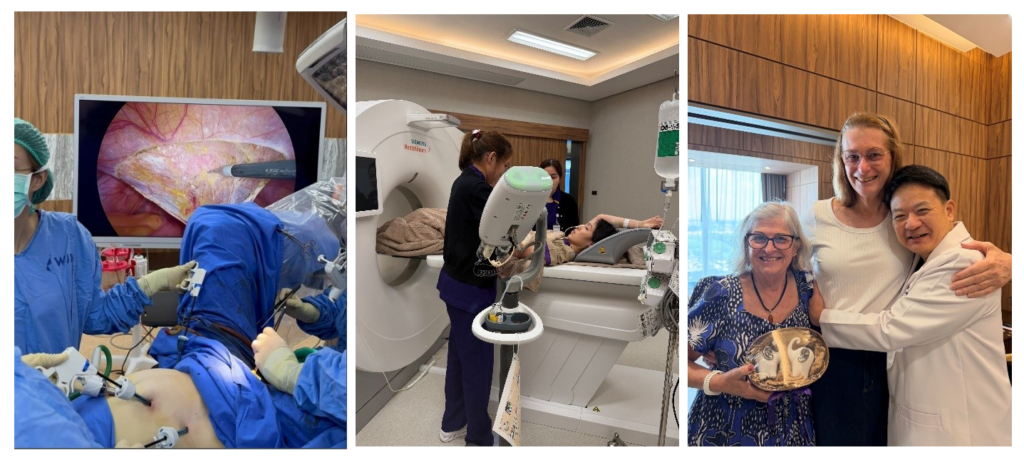
His commitment to innovation led to the development of the Non-Penile Inversion (NPI) Surgical Design, focusing on natural external genital reconstruction and meticulous use of available tissue. His expertise spans Skin Graft, Hybrid PPV, Colon, and Zero-Depth Vaginoplasty. For advanced procedures requiring laparoscopic peritoneal or colon tissue harvesting, he collaborates closely with experienced co-surgeons to combine specialized skills in a coordinated surgical approach.

For Dr. Chet, surgery is not only about creating the desired anatomy. It is also about protecting blood supply, preserving sensation, and recognizing and managing complications promptly. Every procedure requires careful planning, technical precision, and dedication to the details that shape long-term outcomes.

  • The WIH Team — By Your Side Through Recovery

After surgery, WIH’s multidisciplinary team supports both your physical recovery and emotional well-being. Care includes anesthesia management, pain control, wound monitoring, infection prevention, nursing support, early mobilization, and personalized vaginal dilation training.

WIH’s hospital-based Long-Stay Recovery allows patients to recover under the close supervision of experienced nurses and medical professionals. This extended care gives patients time to heal, practice essential self-care skills, and receive individualized guidance before returning home.

If concerns arise, Dr. Chet can assess patients promptly, with anesthesiology and operating-room support available 24 hours a day for surgical emergencies. Our commitment continues beyond your hospital stay, from discharge preparation and dilation training to follow-up care after you return to your home country.

Explore WIH Long-Stay Recovery

Preparing for Your Gender-Affirming Surgery

Ready to take the next step? Learn about medical requirements, preoperative consultations, surgery scheduling, and planning your stay in Thailand.

Explore Our GAS Preparation Guide


Surgical Risks and Possible Complications

Gender-affirming surgery is a major operation, and like all surgery, it carries risks. We want you to understand them clearly before you decide. The type and likelihood of complications depend on the technique, your health, anatomy, tissue condition, and postoperative care.

The tables below list important complications you should know about before surgery. The list is not exhaustive, and not every complication applies to every technique. Some complications may need additional treatment or revision surgery.

External Genital, Wound, and Urinary Complications

No.Potential Complication
1Bleeding or Hematoma
2Skin-Flap or Reconstructed Genital-Tissue Necrosis
3Surgical-Site Infection or Abscess
4Urinary Retention or Difficulty Urinating
5Wound Dehiscence or Persistent Granulation Tissue

Vaginal Canal and Intra-abdominal Complications

No.Potential Complication
6Rectal Injury or Rectoneovaginal Fistula
7Neovaginal Stenosis, Shortening, or Loss of Depth
8Bowel Obstruction
9Bowel Anastomotic Leakage*
10Colon-Segment Prolapse Through the Vaginal Opening*

*Bowel anastomotic leakage and colon-segment prolapse are specifically associated with colon vaginoplasty. The complications relevant to each patient depend on the selected surgical technique.

Your Risk Factors and How to Reduce Them

Your chance of complications depends on your overall health, anatomy, chosen procedure, tissue condition, and how closely you follow instructions before and after surgery.

If you smoke, vape, or use nicotine in any form, blood flow to your tissue can drop, which raises the risk of slow healing, infection, wound separation, and tissue loss. A higher body mass index (BMI) may increase risks related to anesthesia, blood clots, wound healing, and infection. If you are considering colon vaginoplasty, Dr. Chet will also carefully assess your bowel health and anything that could affect bowel healing.

Having a risk factor does not mean a complication will happen. Every patient is assessed individually, and we help you address risks that can be changed before surgery. After surgery, following wound-care and dilation instructions remains essential for healing, depth, and your long-term result.

Understand Possible Complications, Warning Signs, and Treatment

A Great Outcome Is a Partnership

A successful outcome in gender-affirming surgery takes more than surgical skill alone. It comes from three partners working together: You, Dr. Chet, and the WIH team. Each plays an essential role in creating, protecting, and maintaining your results, from your first consultation through long-term recovery.

  • You — Understanding and Self-Care

Gender-affirming surgery can bring meaningful changes to your appearance and sexual function, but every result is influenced by your anatomy, available tissue, healing, and postoperative care. Before making your decision, it is important to understand the goals, limitations, risks, and recovery requirements of your chosen procedure. Your results may differ from another patient’s photographs, and no specific appearance, vaginal depth, sensation, or healing outcome can be guaranteed.

Your commitment is equally important. Providing an accurate medical history, following preoperative instructions, caring for your wounds, maintaining regular vaginal dilation, respecting activity restrictions, and attending follow-up appointments all contribute to a successful recovery. Consistent self-care is essential to preserving your vaginal depth and long-term surgical results.

  • Dr. Chet — Experience, Innovation, and Surgical Dedication

With over 30 years of experience in transgender surgery, Dr. Chettasak Tulayaphanich (Dr. Chet) has dedicated his career to improving the appearance, function, and sensation of gender-affirming surgical outcomes.

As the founder of WIH International Hospital, his vision is to establish a center of excellence in transgender surgery and a welcoming wellness hub for the LGBTQ+ community, bringing together specialized surgical expertise and comprehensive patient care.

His commitment to innovation led to the development of the Non-Penile Inversion (NPI) Surgical Design, focusing on natural external genital reconstruction and meticulous use of available tissue. His expertise spans Skin Graft, Hybrid PPV, Colon, and Zero-Depth Vaginoplasty. For advanced procedures requiring laparoscopic peritoneal or colon tissue harvesting, he collaborates closely with experienced co-surgeons to combine specialized skills in a coordinated surgical approach.

For Dr. Chet, surgery is not only about creating the desired anatomy. It is also about protecting blood supply, preserving sensation, and recognizing and managing complications promptly. Every procedure requires careful planning, technical precision, and dedication to the details that shape long-term outcomes.

  • The WIH Team — By Your Side Through Recovery

After surgery, WIH’s multidisciplinary team supports both your physical recovery and emotional well-being. Care includes anesthesia management, pain control, wound monitoring, infection prevention, nursing support, early mobilization, and personalized vaginal dilation training.

WIH’s hospital-based Long-Stay Recovery allows patients to recover under the close supervision of experienced nurses and medical professionals. This extended care gives patients time to heal, practice essential self-care skills, and receive individualized guidance before returning home.

If concerns arise, Dr. Chet can assess patients promptly, with anesthesiology and operating-room support available 24 hours a day for surgical emergencies. Our commitment continues beyond your hospital stay, from discharge preparation and dilation training to follow-up care after you return to your home country.

Explore WIH Long-Stay Recovery

Preparing for Your Gender-Affirming Surgery

Ready to take the next step? Learn about medical requirements, preoperative consultations, surgery scheduling, and planning your stay in Thailand.

Explore Our GAS Preparation Guide

Surgical Risks and Possible Complications

Gender-affirming surgery is a major operation, and like all surgery, it carries risks. We want you to understand them clearly before you decide. The type and likelihood of complications depend on the technique, your health, anatomy, tissue condition, and postoperative care.

The tables below list important complications you should know about before surgery. The list is not exhaustive, and not every complication applies to every technique. Some complications may need additional treatment or revision surgery.

External Genital, Wound, and Urinary Complications

No.Potential Complication
1Bleeding or Hematoma
2Skin-Flap or Reconstructed Genital-Tissue Necrosis
3Surgical-Site Infection or Abscess
4Urinary Retention or Difficulty Urinating
5Wound Dehiscence or Persistent Granulation Tissue

Vaginal Canal and Intra-abdominal Complications

No.Potential Complication
6Rectal Injury or Rectoneovaginal Fistula
7Neovaginal Stenosis, Shortening, or Loss of Depth
8Bowel Obstruction
9Bowel Anastomotic Leakage*
10Colon-Segment Prolapse Through the Vaginal Opening*

*Bowel anastomotic leakage and colon-segment prolapse are specifically associated with colon vaginoplasty. The complications relevant to each patient depend on the selected surgical technique.

Your Risk Factors and How to Reduce Them

Your chance of complications depends on your overall health, anatomy, chosen procedure, tissue condition, and how closely you follow instructions before and after surgery.

If you smoke, vape, or use nicotine in any form, blood flow to your tissue can drop, which raises the risk of slow healing, infection, wound separation, and tissue loss. A higher body mass index (BMI) may increase risks related to anesthesia, blood clots, wound healing, and infection. If you are considering colon vaginoplasty, Dr. Chet will also carefully assess your bowel health and anything that could affect bowel healing.

Having a risk factor does not mean a complication will happen. Every patient is assessed individually, and we help you address risks that can be changed before surgery. After surgery, following wound-care and dilation instructions remains essential for healing, depth, and your long-term result.

Understand Possible Complications, Warning Signs, and Treatment

Frequently Asked Questions About Gender-Affirming Surgery

WIH offers Skin Graft Vaginoplasty, Laparoscopic Colon Vaginoplasty, Hybrid PPV Vaginoplasty, Zero-Depth Vaginoplasty, and Orchiectomy. Dr. Chet will help you choose the procedure that fits your anatomy, goals, and needs.

The main difference is the tissue that lines the vagina. Skin Graft Vaginoplasty uses skin, Colon Vaginoplasty uses a segment of the large intestine, and Hybrid PPV combines a skin graft with peritoneal tissue. Each has its own advantages, limitations, and aftercare.

Dr. Chet will work through this with you during your consultation, looking at your anatomy, the depth you want, your lubrication preferences, your medical history, and how ready you are for aftercare, and then recommend the approach that suits you.

Traditional penile inversion uses penile skin to line the vaginal canal. Dr. Chet’s Non-Penile Inversion (NPI) Technique instead preserves the penile and preputial skin for the external genitals, focusing on a natural appearance, anatomical refinement, and preserved sexual sensation.

Preserving sensation is a major priority of the NPI Technique. Dr. Chet reconstructs the clitoris from sensitive glans tissue while protecting its nerve supply. Many patients keep sexual sensation and can experience orgasm after recovery, although results vary and cannot be guaranteed.

It depends on the technique, your anatomy, and how you heal. At WIH, the usual goal is at least 6 inches for Skin Graft Vaginoplasty, at least 6.5 inches for Hybrid PPV, and at least 7 inches for Colon Vaginoplasty. Keeping that depth long term also depends on aftercare and regular dilation.

Yes. If you have full-depth vaginoplasty, regular dilation is essential to maintain depth and width, especially during the first two years. WIH provides a structured dilation program with personal instructions and ongoing support. Zero-Depth Vaginoplasty does not require dilation.

Like any major surgery, vaginoplasty carries risks such as bleeding, infection, wound separation, tissue necrosis, and difficulty urinating. Depending on the technique, risks may also include vaginal narrowing, loss of depth, fistula, or complications inside the abdomen. Careful planning, close monitoring after surgery, and following your recovery instructions all help reduce these risks.

Simply contact WIH by email, WhatsApp, or any of our social media channels. Tell us about your surgical goals and general health, and ask about your options.
If you live abroad, you can receive initial guidance and book an online consultation before traveling to Thailand, or meet us in person at WIH. Our team will guide you through the medical tests, documents, scheduling, and travel preparation you need.

Plan Your Surgery at WIH

Discuss your surgical goals, explore your options, and receive personalized guidance from the WIH team

Send Us an Email - info@wihhospital.com Chat on WhatsApp: +66 95 650 3892

Plan Your Surgery at WIH

Discuss your surgical goals, explore your options, and receive personalized guidance from the WIH team

Send Us an Email - info@wihhospital.com Chat on WhatsApp: +66 95 650 3892