What Is Shoulder Narrowing Surgery and Why Is It Becoming Popular?
Shoulder narrowing surgery, also known as clavicle reduction surgery, is a procedure designed to reduce the width of the shoulders by shortening a portion of the collarbone (clavicle). The remaining bone is then stabilized using titanium plates and screws during the healing process.
The procedure has become increasingly popular among individuals seeking:
Unlike exercise or weight loss, which mainly affect muscle and fat, shoulder narrowing surgery changes the bone structure itself, allowing for a more permanent reduction in shoulder width.
Today, the procedure is gaining international attention, especially among transgender women and patients interested in aesthetic body contouring procedures.
ดูโพสต์นี้บน Instagram
Why Post-Operative Restrictions Are Important
Recovery after shoulder narrowing surgery is extremely important because the clavicle bone needs time to heal and stabilize properly. Following post-operative restrictions carefully can help support safe healing and long-lasting results.
“`html id=”v6z3qp”
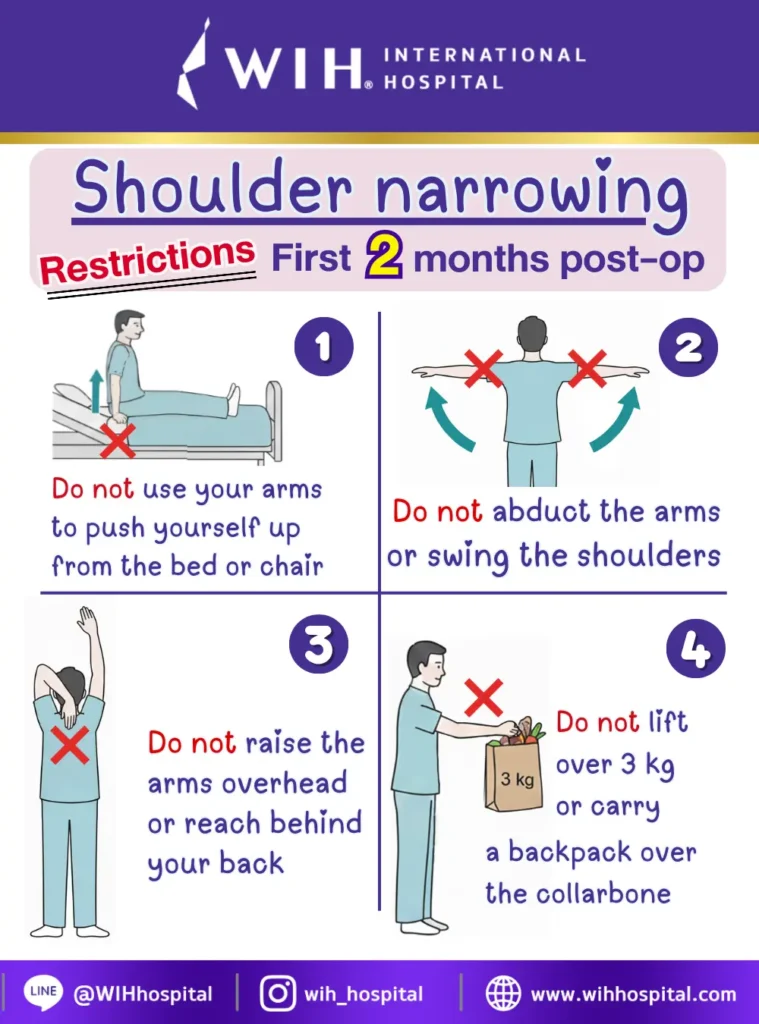
1. Avoid Using Your Arms to Push Yourself Up
After surgery, patients should avoid pushing themselves up from a bed or chair using their arms.
- use your legs for support
- move slowly
- ask for assistance when needed
2. Avoid Wide Arm Movements
Large shoulder movements may place stress on the healing clavicle.
- avoid swinging motions
- avoid stretching the arms outward
- minimize sudden shoulder movement
3. Avoid Raising the Arms Overhead
Movements above shoulder level can create tension around the collarbone area.
- avoid overhead reaching
- avoid certain dressing movements
- avoid excessive shoulder mobility
4. Avoid Lifting Heavy Objects
Heavy lifting can increase pressure on the clavicle fixation system.
- avoid lifting over 3 kilograms
- avoid carrying backpacks
- avoid strenuous upper-body activity
Why These Restrictions Matter
Shoulder narrowing surgery involves modifying the clavicle bone structure. During healing, the bone needs stability to recover safely and properly.
Following post-operative instructions may help reduce the risk of:
- delayed healing,
- discomfort,
- excessive stress on titanium plates and screws,
- and recovery complications.
Final Thoughts
Proper aftercare plays an essential role in shoulder narrowing surgery recovery. Avoiding excessive shoulder movement and protecting the clavicle area during the first weeks after surgery can help support a smoother recovery process and optimal long-term results.