Brow Ridge Bone Reduction by Dr. Chettasak Tulyapanich | WIH Hospital Bangkok
Discover advanced forehead contouring and brow ridge reduction by Dr. Chettasak Tulyapanich at WIH International Hospital Bangkok — safe, precise, feminine results.


Discover advanced forehead contouring and brow ridge reduction by Dr. Chettasak Tulyapanich at WIH International Hospital Bangkok — safe, precise, feminine results.
At WIH International Hospital, Dr. Chettasak Tulyapanich, an internationally recognized expert in Facial Feminization Surgery (FFS), performs advanced brow ridge bone reduction — also known as forehead contouring or frontal sinus setback — to transform the masculine upper face into a smooth, feminine contour.
With over 30 years of surgical experience in gender-affirming and facial bone surgery, Dr. Chettasak’s refined technique ensures precise bone reshaping, safety, and lifelong natural results.
At WIH International Hospital, Dr. Chettasak Tulyapanich, an internationally recognized expert in Facial Feminization Surgery (FFS), performs advanced brow ridge bone reduction — also known as forehead contouring or frontal sinus setback — to transform the masculine upper face into a smooth, feminine contour.
With over 30 years of surgical experience in gender-affirming and facial bone surgery, Dr. Chettasak’s refined technique ensures precise bone reshaping, safety, and lifelong natural results.
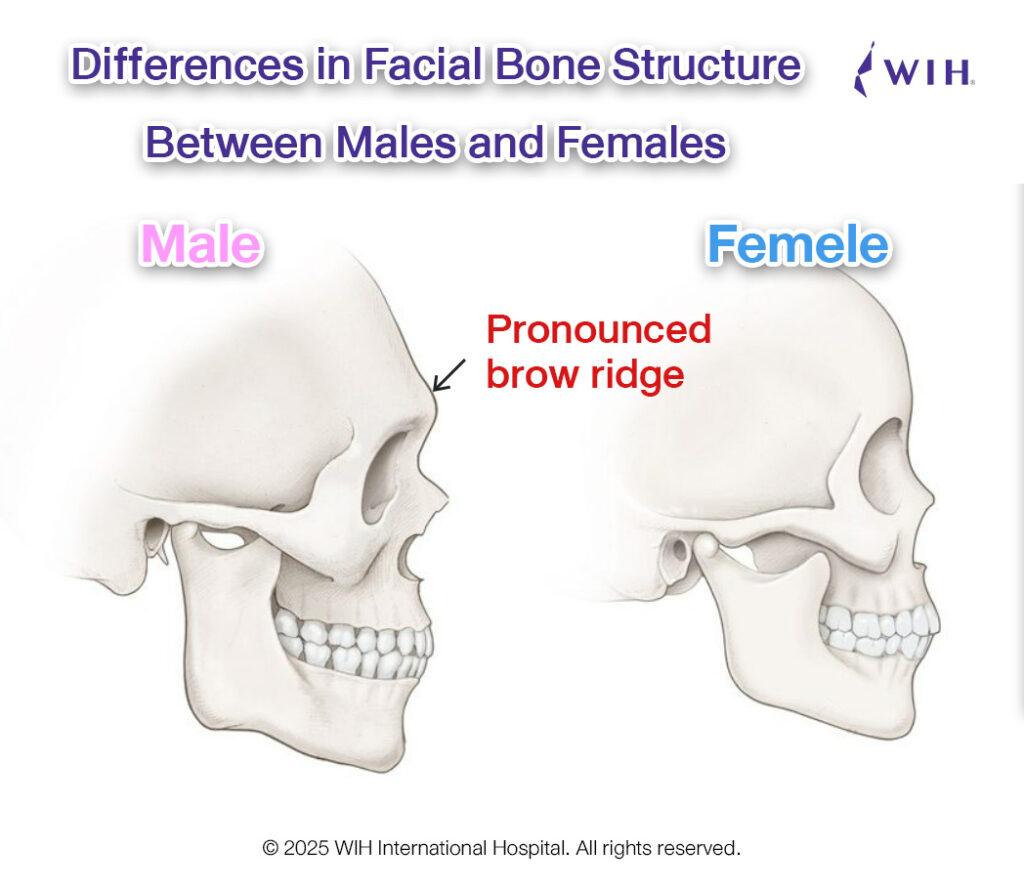
The brow ridge forms part of the frontal bone, which houses a natural air cavity called the frontal sinus. The size and shape of this sinus vary greatly among individuals and are clearly visible on CT scans or X-rays.
At WIH Hospital, Dr. Chettasak uses detailed imaging to plan each surgery precisely, ensuring both aesthetic harmony and structural safety.
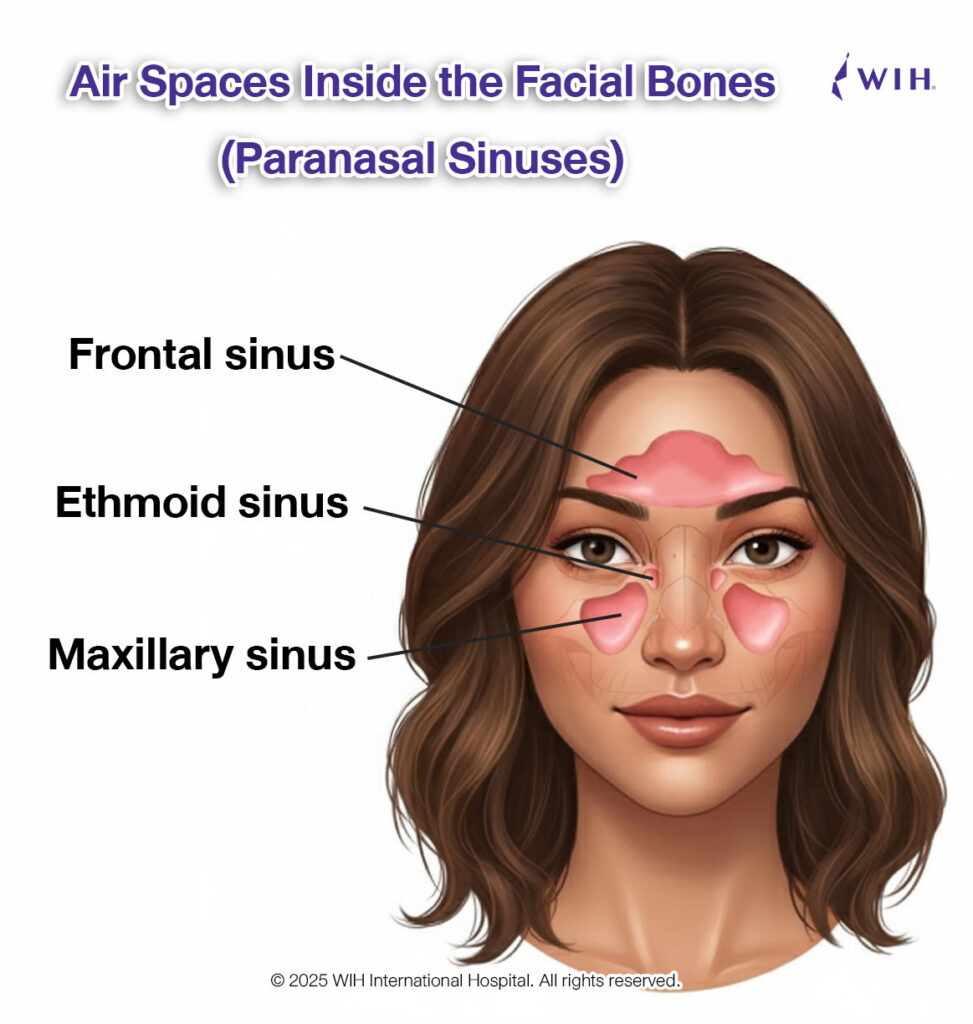
Dr. Chettasak Tulyapanich classifies brow ridge reduction into three main techniques, depending on the anatomy of the frontal sinus:
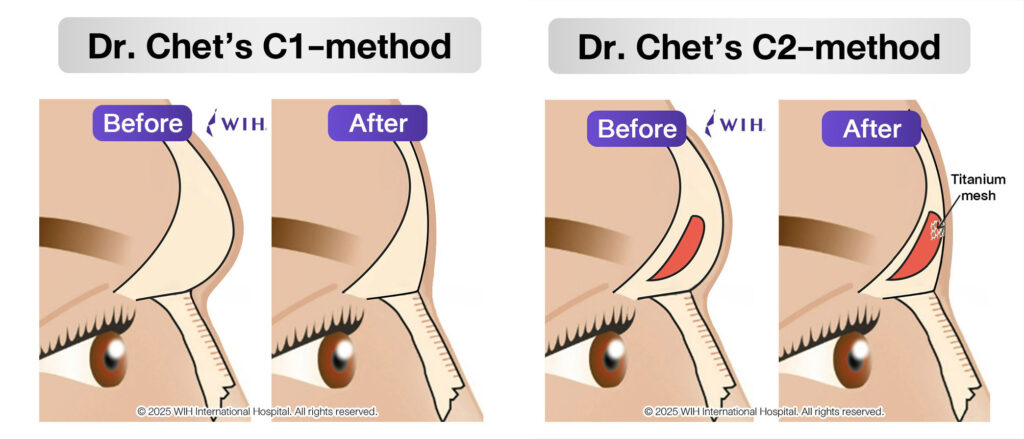
Used in rare cases where the patient has little or no frontal sinus. The surgery involves simply shaving down the excess bone thickness until the brow ridge contour appears smooth and balanced.
Ideal for patients with a small sinus and moderate protrusion.
Dr. Chettasak gently depresses the prominent area inward into the sinus and reinforces it with a titanium mesh, restoring the bone’s strength while creating a soft, natural curve.
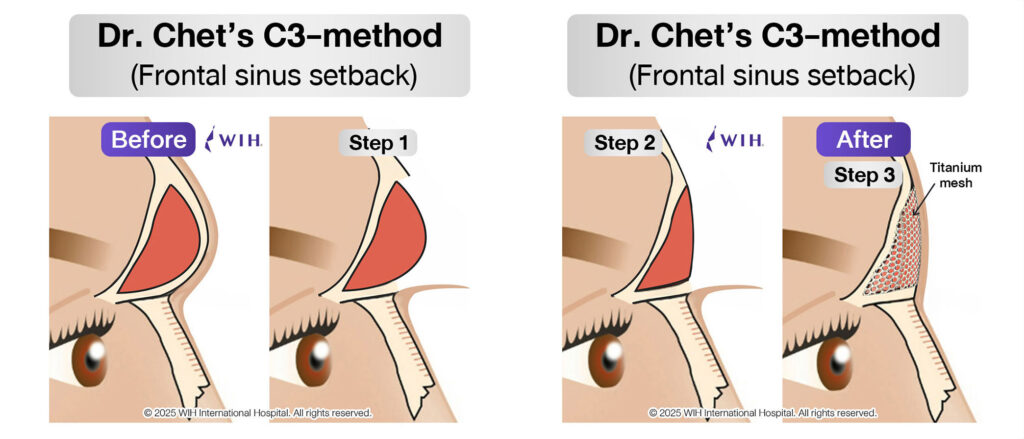
This is the most common and advanced technique performed at WIH International Hospital. It is designed for patients with a large frontal sinus and a highly prominent brow ridge.
Surgical steps include:
Titanium mesh offers bone-level strength, is biocompatible, and remains safely in the body for life without long-term side effects.
When performed by Dr. Chettasak, brow ridge reduction creates a smooth, naturally curved forehead and a gentler facial expression.
The space between the eyebrows and eyes becomes wider, transforming the overall look from masculine to feminine while maintaining each patient’s unique character.
For patients with low eyebrows or a high hairline, Dr. Chettasak often combines the procedure with a brow lift or hairline lowering (scalp advancement) for optimal harmony and aesthetic proportion.
After brow ridge reduction or forehead contouring surgery, patients receive attentive care under the supervision of WIH Hospital’s 24-hour nursing team, ensuring safety and comfort throughout recovery.
A special headband is applied after surgery to support the forehead and minimize swelling.
The wearing period varies by technique — approximately 10 days for C1, 20 days for C2, and 30 days for C3.
If a surgical drain (Redivac) is used to prevent fluid buildup, it is generally removed about 3 days after surgery.
Stitches along the coronal incision are typically removed between 9–12 days after surgery, depending on wound tension.
Mild swelling or minor bruising around the eyelids may appear during the first few days.
Cold compresses will be applied to relieve swelling and enhance comfort.
A noticeable feminine change is often seen immediately after surgery, and the final refined contour develops within 2–3 months.
Patients are advised to sleep with the head elevated, avoid heavy activity for 3–4 weeks, wash hair gently after 5–7 days, and protect the incision from sunlight until fully healed.
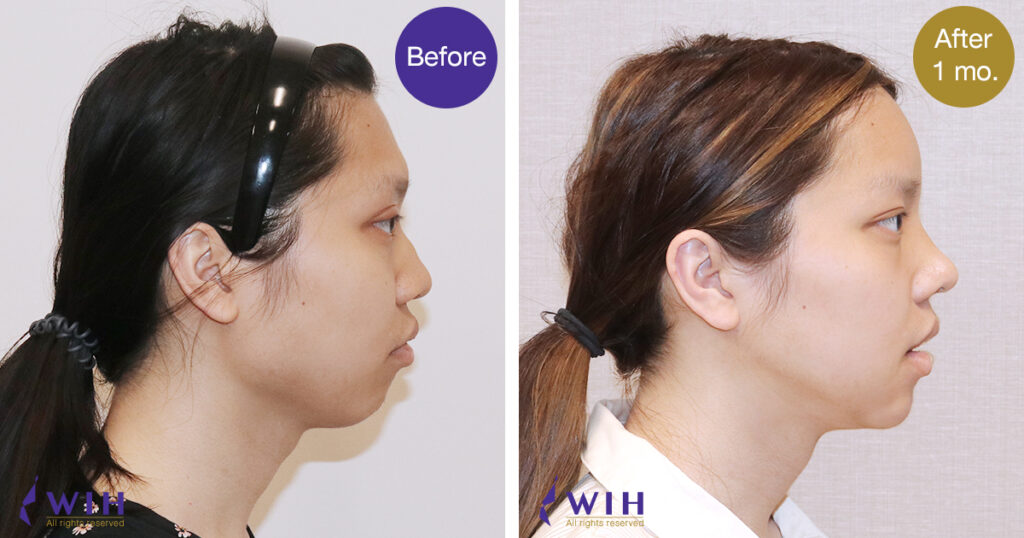
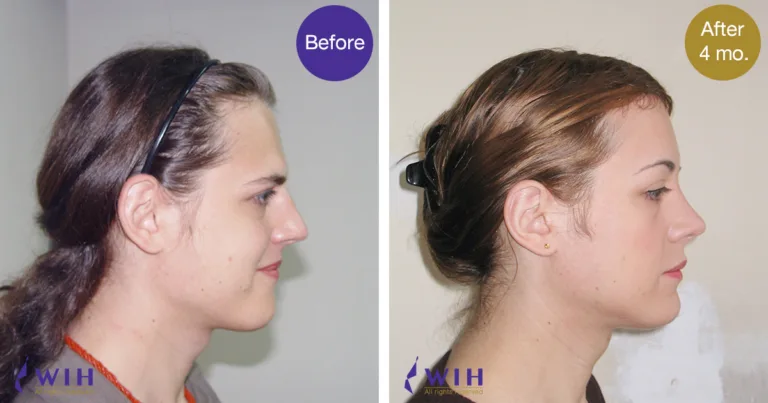
If you’re considering brow ridge bone reduction, forehead contouring, or frontal sinus setback, schedule a confidential consultation with Dr. Chettasak Tulyapanich at WIH International Hospital Bangkok.
Experience precision surgery, advanced hospital care, and a naturally feminine transformation guided by one of Thailand’s most respected Facial Feminization Surgeons.
All techniques of brow ridge bone contouring are performed through a coronal incision, which may be placed inside the hair or along the anterior hairline, depending on the surgical plan.
For standalone brow ridge contouring, the incision is made within the hair-bearing scalp, so it is completely hidden and not visible after healing.
For combined brow ridge contouring with a brow lift, the incision is placed along the anterior hairline to precisely control the hairline position and prevent it from moving higher after the lift.
In this case, a fine scar may be slightly visible during the early healing period but will fade naturally within 3–6 months.
With Dr. Chettasak Tulyapanich’s expertise in preserving hair roots along the incision, there is no risk of hair loss around the coronal line, ensuring natural regrowth and a seamless appearance after recovery.
Not always.
A brow lift is recommended for patients with naturally low eyebrows, as performing it together with brow ridge reduction enhances the overall feminine appearance and creates a harmonious forehead proportion.
For patients with adequate brow height, brow ridge contouring alone is usually sufficient to achieve a natural feminine look.
Yes.
The results of brow ridge bone contouring are permanent, as the bone is reshaped according to the chosen technique (C1, C2, or C3).
Each method follows Dr. Chettasak’s surgical standard to ensure long-term stability and symmetry.
Titanium mesh, when used, provides lifelong reinforcement — meaning the forehead contour will not change over time, and there are no long-term side effects or shifting of shape.
Some surgeons use PMMA (polymethyl methacrylate) bone cement for frontal sinus reconstruction, but Dr. Chettasak Tulyapanich strongly discourages its use due to several potential long-term complications.
PMMA may lead to chronic swelling or inflammation around the forehead or sinus, fluid accumulation (seroma), and allergic or foreign-body reactions.
In certain cases, it can also cause palpable or visible edges under thin skin, as well as infection or irritation within the sinus.
Based on Dr. Chettasak’s extensive surgical experience, titanium mesh reconstruction provides a much safer and more durable alternative, ensuring long-term biocompatibility and natural results without these risks.
From his extensive experience treating revision cases, Dr. Chettasak exclusively uses titanium mesh, which integrates safely with bone, avoids allergic reactions, and provides permanent stability.
Ready to learn more, or need support with your dilation routine? Contact Dr. Chettasak’s team at WIH International Hospital.

