Gender-Affirming Surgery for Transgender Women in Thailand

Designed for natural appearance, functional depth, and preserved erotic sensation.
Supported by individualized surgical planning and comprehensive postoperative care.

At WIH, every surgical plan begins with a careful assessment of the patient’s anatomy, available tissue, desired vaginal function, medical condition, and commitment to postoperative care. These factors guide the selection of the most appropriate surgical technique and recovery plan for each patient.

What Defines a Satisfactory Outcome?

Patient satisfaction depends on more than appearance alone. A satisfactory outcome should balance three closely connected goals: natural external appearance, sexual function, and erotic sensation.

1. Natural External Appearance

The surgical design should recreate the recognizable features and proportions of natural cis-female external genital anatomy, including well-defined labia minora, an appropriately designed clitoris and clitoral hood, and a naturally shaped vaginal opening. The final appearance also depends on individual anatomy, available tissue, and healing.

2. Sexual Function

The neovagina should provide adequate depth and width, together with a healthy and stable vaginal lining, to support comfortable penetration. The choice of vaginal lining—skin graft, peritoneal tissue, or colon—should be based on the patient’s anatomy, functional goals, and ability to maintain postoperative dilation.

3. Erotic Sensation

Preserving erotic sensation requires meticulous construction of the clitoris and other sensate structures, with careful preservation of their nerve and blood supply. Sensory recovery varies among patients and may continue to develop over time.

A satisfactory outcome should not be defined by appearance, depth, or sensation alone. All three goals must be considered together from the beginning of surgical planning.

Understanding NPI: External Design and Vaginal Lining

Patients may encounter several terms when researching gender-affirming surgery, including penile inversion, NPI, skin graft vaginoplasty, PPV, and colon vaginoplasty. These terms can be confusing because they do not all describe the same part of the operation.

To understand the differences clearly, the operation should be considered in two parts: the construction of the external genital anatomy and the tissue used to line the vaginal canal.

Part 1 — External Genital Design

The external genital design determines how the available genital tissue is used to construct the clitoris, clitoral hood, labia minora, labia majora, urethral opening, and vaginal opening.

Penile Inversion

In conventional penile inversion vaginoplasty, a substantial portion of the penile skin is inverted inward to form the vaginal canal. The remaining genital tissue is then used to construct the external genital structures. The exact design varies among surgeons.

The WIH NPI Surgical Design

NPI stands for Non-Penile Inversion. In the WIH NPI design, the penile skin is not inverted to become the primary vaginal lining. Instead, carefully selected prepuce skin is used to construct well-defined labia minora, while the penile skin is oriented vertically to help create the external vulvar contour and a natural V-shaped vaginal opening.

Because the penile and prepuce skin are reserved for the external genital design, the vaginal canal is created and lined separately.

Why Individualized Planning Matters

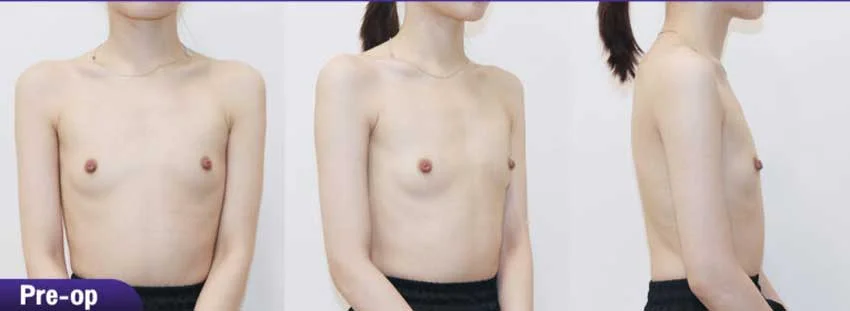
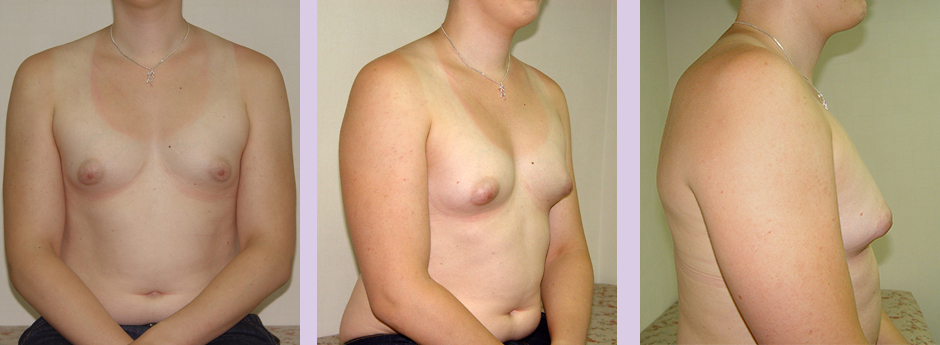
Transgender and cisgender breast augmentation share the same fundamental surgical principles. However, the starting anatomy can vary considerably among transgender women—from limited breast tissue over a broad chest to well-developed breasts following hormone therapy.

These differences affect implant coverage, breast projection, cleavage and the shape of the lower breast. The same implant size or surgical technique can therefore produce different results in different patients.

A meaningful consultation connects the appearance a patient hopes to achieve with the possibilities and limitations of her anatomy. The surgical assessment considers five factors together: existing breast tissue, chest width, nipple position, the pectoralis muscle and the inframammary fold.

Breast Development Following Hormone Therapy

Estrogen can produce meaningful breast development, but the amount and timing vary. Some patients achieve the volume they want through hormone therapy, while others consider augmentation for additional fullness or a different contour.

Published research illustrates this variation:

StudyParticipantsObservation periodMain finding
de Blok et al., 2018229 transgender womenOne year48.7% had a calculated cup size below AAA.
de Blok et al., 202169 transgender womenThree yearsBreast volume continued to increase; 71% had a calculated cup size below A.

These studies involved different cohorts and measurement methods, so their percentages should not be compared directly. The findings provide context rather than predict an individual patient’s development.

Limited breast development does not necessarily indicate inadequate hormone treatment. The amount of existing tissue, the stage of development and the patient’s goals should all inform the timing and planning of surgery.

Five Anatomical Factors That Shape the Surgical Plan

1. Existing Breast Tissue — Coverage and Natural Contour

Existing breast tissue contributes to the final breast volume and provides coverage over the implant. When development is substantial, a moderate implant may provide the desired enhancement while working with the shape already present.

When tissue is limited, the implant creates more of the breast mound. Its dimensions and placement require particular attention to avoid an abrupt transition from the chest to the breast or excessive visibility of implant edges.

Limited tissue does not automatically mean that a larger implant is better. Chest width, skin flexibility and the available space for expansion must also be considered.

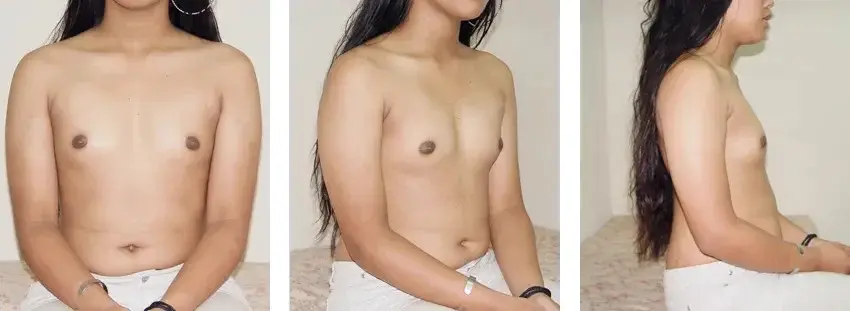
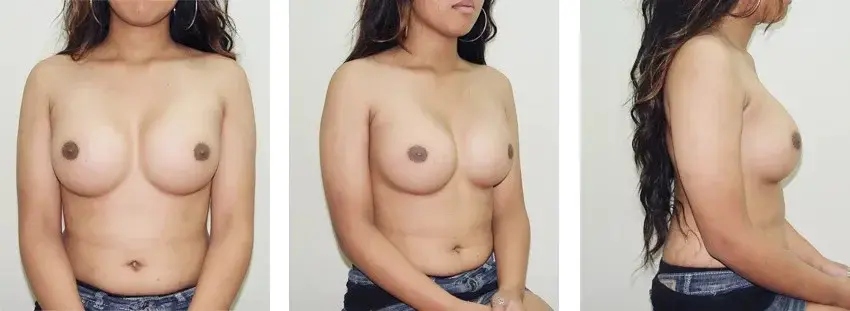
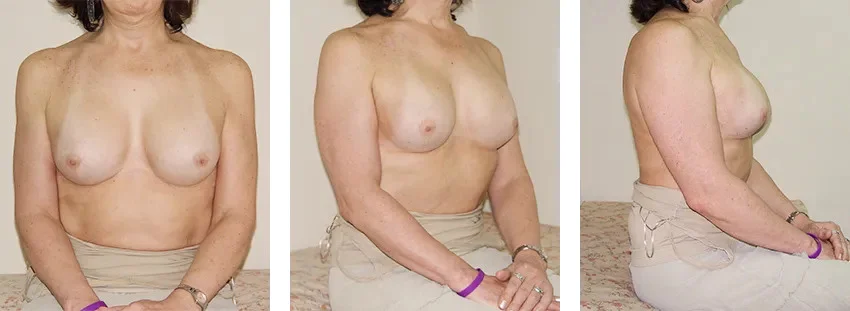
Patient Example — 380 cc Breast Implants
18-year-old patient from France

breast-augmentation-380cc-dr-chettasak-before-surgery

Before Surgery

breast-augmentation-380cc-dr-chettasak-after-surgery

After Surgery

This case illustrates how implant selection complements existing breast tissue and chest proportions. Individual results vary.

Surgery by Dr. Chettasak Tulayaphanich · WIH International Hospital

Explore Dr. Chettasak’s NPI Surgical Design

NPI Surgical Design for MTF Gender-Affirming Surgery

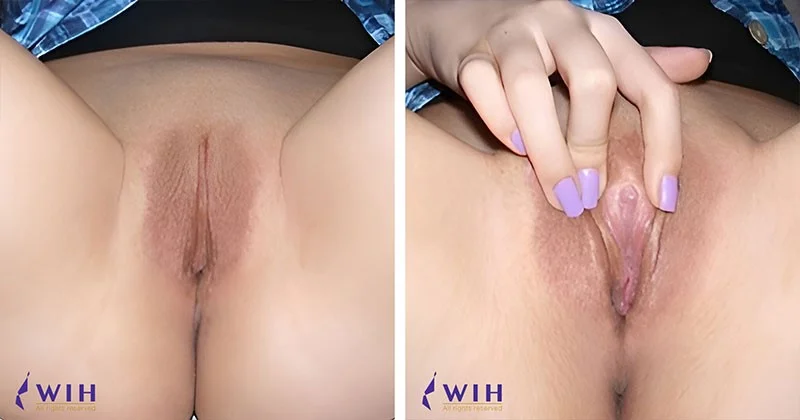
Dr. Chettasak’s NPI Surgical Design for MTF Gender-Affirming Surgery

This case illustrates how the NPI technique focuses on natural feminine genital appearance, anatomical precision, and preservation of erotic sensation. Individual results vary.

Surgery by Dr. Chettasak Tulayaphanich · WIH International Hospital

2. Chest Width — Matching the Implant to Body Proportions

Chest width helps determine the appropriate implant base. On a broad chest, a narrow implant may create a prominent but relatively small breast mound that does not balance the surrounding torso.

Implant selection therefore considers width, projection and volume together. A broader implant may provide a more proportionate footprint, while its projection determines how much fullness extends forward.

Some patients with a broad chest may need a larger implant to achieve their desired proportions. However, there is no minimum implant size for transgender breast augmentation. The final choice depends on measured anatomy, tissue coverage and the dimensions of the selected model.

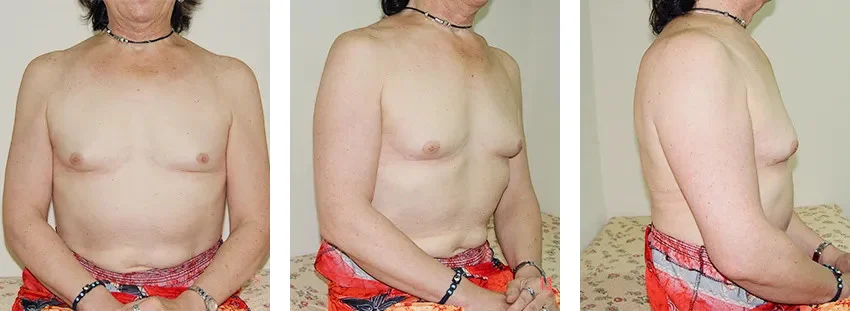
Patient Example — 600 cc Breast Implants
59-year-old patient from France

Breast-implant-surgery-600cc-Doctor-Chettawut-breast-augmnetation-gallery-before-surgery

Before Surgery

Broad-chest anatomy before breast augmentation with 600 cc implants at WIH Hospital

Breast-implant-surgery-600cc-Doctor-Chettawut-breast-augmnetation-gallery-after-surgery

After Surgery

Broad-chest result after breast augmentation with 600 cc implants at WIH Hospital

This case illustrates how implant selection complements existing breast tissue and chest proportions. Individual results vary.

Surgery by Dr. Chettasak Tulayaphanich · WIH International Hospital

Part 2 — Vaginal Canal and Lining

In the WIH NPI approach, the external genital anatomy and the vaginal canal lining are planned as separate but closely related components. Skin Graft, Hybrid PPV, and Colon Vaginoplasty all share Dr. Chettasak’s NPI external genital design, while NPI Zero-Depth Vaginoplasty applies the same external design without creating a vaginal canal.

How External Genital Design and Vaginal Lining Work Together

Surgical OptionWhat It MeansExternal Genital DesignVaginal Canal Lining
Conventional Penile Inversion VaginoplastyPenile skin is inverted inward to form the vaginal canal.Constructed from the remaining genital tissue; the design varies among surgeons.Primarily penile skin, with an additional skin graft when required
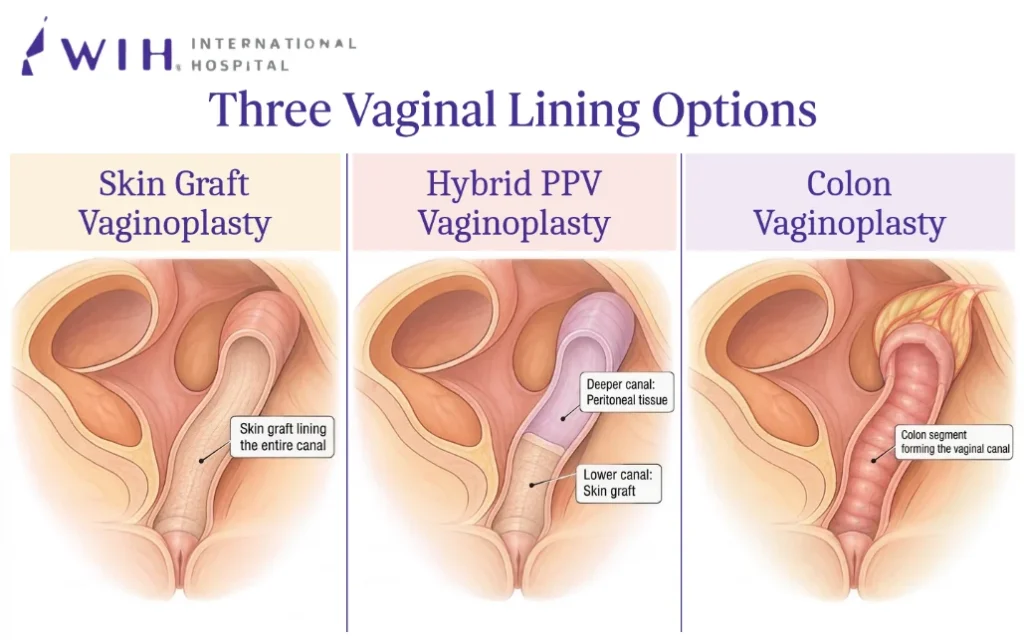
WIH NPI Skin Graft VaginoplastyWIH NPI external genital design combined with a skin graft used to line the entire vaginal canal.WIH NPI external genital designA skin graft lining the entire vaginal canal
WIH NPI Hybrid PPV VaginoplastyWIH NPI external genital design combined with skin graft and peritoneal tissue.WIH NPI external genital designSkin graft lining the lower canal and peritoneal tissue lining the deeper canal
WIH NPI Colon VaginoplastyWIH NPI external genital design combined with colon lining.WIH NPI external genital designA segment of colon forming the vaginal canal
WIH NPI Zero-Depth VaginoplastyWIH NPI external genital design without creation of a vaginal canal.WIH NPI external genital designNo vaginal canal or lining

The most appropriate vaginal lining should be selected according to the patient’s desired depth, expectations for natural moisture and self-lubrication, medical suitability for abdominal surgery, and commitment to postoperative dilation.

H2: Compare Vaginal Lining Options

One NPI external design. Three vaginal lining options.

Skin Graft, Hybrid PPV, and Colon Vaginoplasty should not be understood as three different external genital designs. At WIH, all three full-depth options follow Dr. Chettasak’s NPI principles for constructing the external genital anatomy. Their principal difference is the tissue used to line the vaginal canal.

There is no single vaginal lining that is appropriate for every patient. The choice should be individualized according to the patient’s anatomy, desired depth, expectations for natural moisture and self-lubrication, medical suitability for abdominal surgery, and commitment to postoperative dilation.

Shared Across All Three Full-Depth Options
External genital design: WIH NPI surgical design

Skin Graft Vaginoplasty

Skin Graft Vaginoplasty creates the vaginal lining using a skin graft without requiring abdominal surgery. It may be considered for patients who prefer to avoid abdominal surgery and understand that additional lubricant is generally required.

  • Vaginal lining: Skin graft
  • Usual WIH depth goal: 6 inches or more
  • Natural moisture and self-lubrication: The skin graft does not produce mucus; additional lubricant is generally required
  • Abdominal surgery: Not required
  • Postoperative dilation: Required

Explore Skin Graft Vaginoplasty

Hybrid PPV Vaginoplasty

Hybrid PPV Vaginoplasty combines a skin graft in the lower vaginal canal with peritoneal tissue in the deeper canal. This technique requires laparoscopic surgery and may provide variable natural moisture from the peritoneal lining, although additional lubricant may still be needed.

  • Vaginal lining: Skin graft in the lower canal and peritoneal tissue in the deeper canal
  • Usual WIH depth goal:5 inches or more
  • Natural moisture and self-lubrication: Variable serous moisture from the peritoneal tissue; additional lubricant may still be needed
  • Abdominal surgery: Laparoscopic surgery required
  • Postoperative dilation: Required

3. Nipple Position — Balancing Cleavage and Breast Alignment

Nipple position is especially important when discussing cleavage. Widely spaced nipples affect where each implant should sit to keep the nipple naturally aligned with the new breast mound.

Standard implant augmentation does not directly relocate the nipple–areola complex. Positioning the implants closer to the center may improve medial fullness, but excessive inward positioning can make the nipples appear too far toward the outer edges of the breasts.

The surgical plan balances the desired cleavage with nipple alignment and the normal separation between the breasts. These anatomical limits are discussed during consultation so that expectations are realistic.

breast-augmentation-320cc-dr-chettasak-before-surgery

Before Surgery

breast-augmentation-320cc-dr-chettasak-after-surgery-Post-op 3 months

After Surgery

This case demonstrates a well-balanced result, combining the desired cleavage with proper nipple alignment and a natural separation between the breasts.. Individual results vary.

Surgery by Dr. Chettasak Tulayaphanich · WIH International Hospital

4. Pectoralis Major — Coverage, Projection and Muscle Tension

The pectoralis major is the large chest muscle that can cover the upper portion of an implant. Its thickness and tightness influence both implant selection and pocket creation.

Muscle coverage can be useful when breast tissue is limited, helping soften the transition at the upper breast. A thick or tight muscle may also restrict projection or lower-breast expansion if the pocket is inadequately released.

Assessment includes observing the muscle at rest and during contraction. The surgeon then considers implant projection, controlled muscle release and whether a dual-plane modification is appropriate.

Placement beneath the muscle involves trade-offs. These include muscle-related discomfort during recovery and possible breast movement when the muscle contracts, known as animation deformity.

Patient Example — 600 cc Breast Implants
26-year-old patient from Finland

Breast-implant-surgery-600cc--Doctor-Chettawut-breast-augmnetation-gallery-before-surgery

Before Surgery

Breast-implant-surgery-600cc--Doctor-Chettawut-breast-augmnetation-gallery-after-surgery-5--years

After Surgery

This case illustrates how implant selection and pocket planning account for pectoralis muscle characteristics. Individual results vary.

Surgery by Dr. Chettasak Tulayaphanich · WIH International Hospital

5. Inframammary Fold and Lower Pole — Establishing the Breast Foundation

The inframammary fold, or IMF, is the crease beneath the breast. It defines the lower boundary of the breast mound and influences the relationship between implant position and nipple height.

Some transgender patients have a high fold and a short, tight lower breast. If this space cannot accommodate the selected implant, the implant may sit too high and the lower contour may remain insufficiently developed.

In suitable cases, the fold needs to be lowered. This requires careful measurement and controlled release of restrictive tissues.

Insufficient release may leave the implant high. Excessive lowering may allow it to descend too far, causing bottoming out. Planning considers implant dimensions and the stretched nipple-to-fold distance, with reassessment of breast shape during surgery.

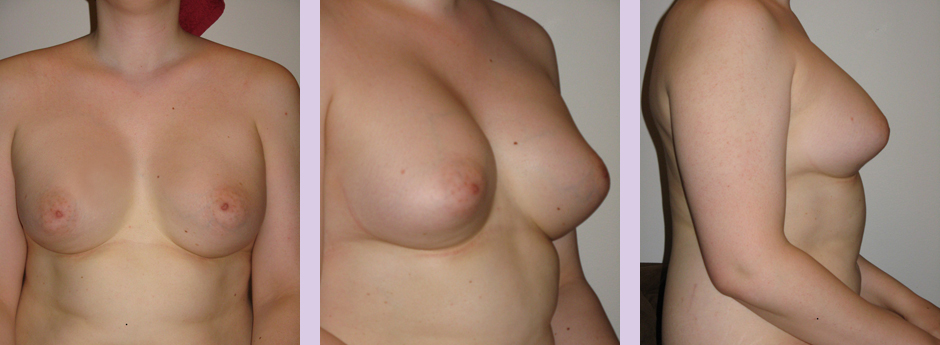
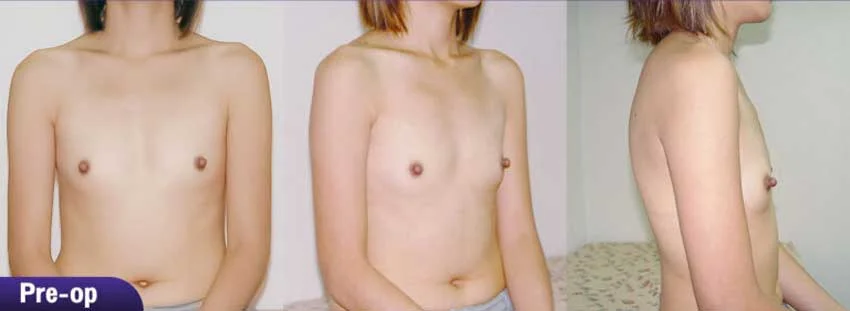
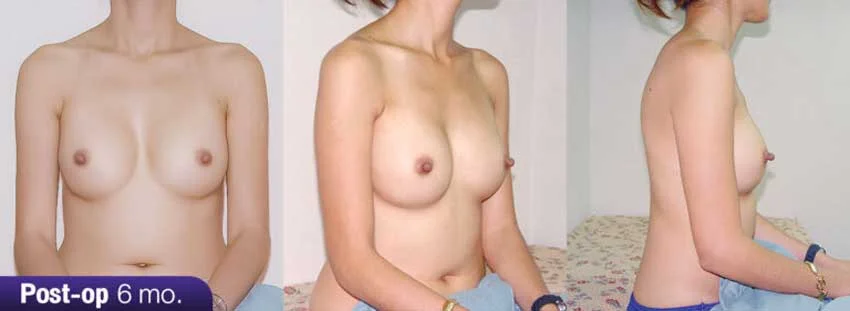
Patient Example — 380 cc Breast Implants 23-year-old patient from Thailand

breast-augmentation-300cc-dr-chettasak-before-surgery

Before Surgery

breast-augmentation-300cc-dr-chettasak-after-surgery-post-op 6 months

After Surgery

Surgery by Dr. Chettasak Tulayaphanich · WIH International Hospital

Explore Hybrid PPV Vaginoplasty

Colon Vaginoplasty

Colon Vaginoplasty uses a segment of colon to create a deeper, mucus-producing vaginal canal. This technique requires laparoscopic bowel surgery and careful assessment of the patient’s general health, bowel condition, and medical suitability for abdominal surgery.

  • Vaginal lining: Colon mucosa
  • Usual WIH depth goal: 7 inches or more
  • Natural moisture and self-lubrication: The colon lining produces mucus; the amount and frequency vary among patients
  • Abdominal surgery: Laparoscopic bowel surgery required
  • Postoperative dilation: Required

Choosing Breast Implants Together

Implant selection is a shared decision. The patient’s preferences guide the desired appearance, while clinical measurements help identify options that can be appropriately covered and supported.

Implant Brand and Model

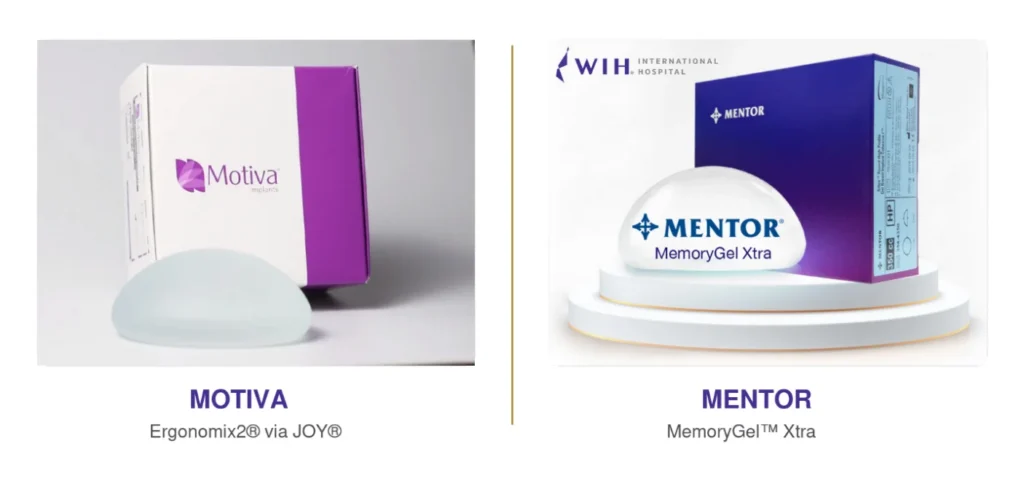
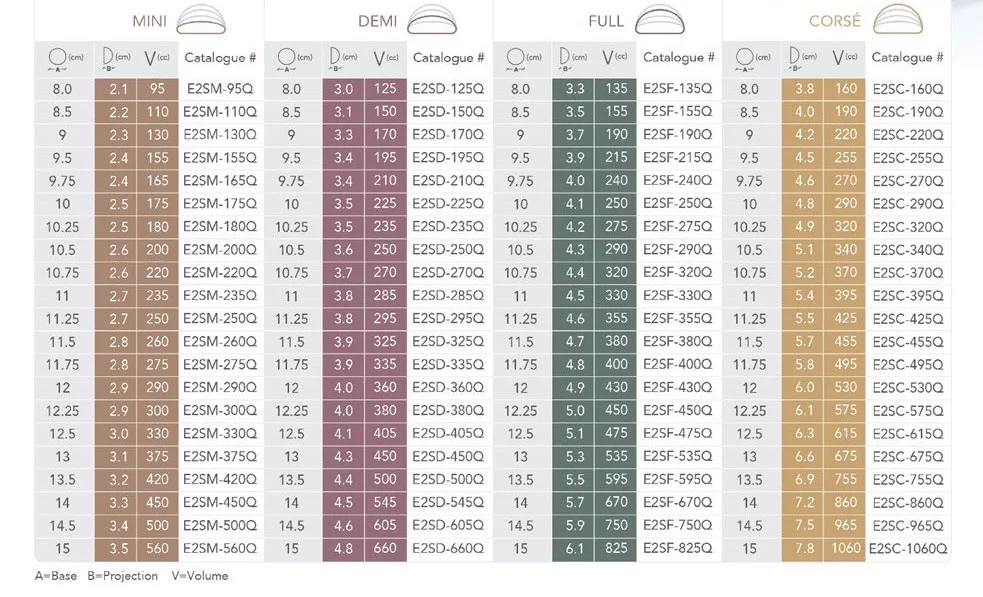
Implant options discussed at WIH include Motiva Ergonomix2 through the JOY program and Mentor MemoryGel Xtra.

The consultation explains relevant differences between available models, including dimensions, projection and gel characteristics. The recommendation considers how these features relate to the patient’s tissues and desired contour.

Current availability, product information and warranty terms are reviewed when the treatment plan is finalized.

Motiva and Mentor breast implant options discussed at WIH Hospital

Explore Colon Vaginoplasty

Important Clinical Information

Natural moisture varies according to the vaginal lining and the individual patient. Moisture produced by peritoneal or colon tissue is not equivalent to arousal-related vaginal lubrication, and additional lubricant may still be needed.

The stated depth figures are surgical goals, not guarantees. Final vaginal depth depends on individual anatomy, available tissue, intraoperative findings, healing, and adherence to the postoperative dilation program.

Do You Need a Vaginal Canal?

Patients who do not require a vaginal canal for receptive penetration may consider WIH NPI Zero-Depth Vaginoplasty. This procedure applies the same principles of NPI external genital design without creating a vaginal canal. Because no vaginal canal is created, dilation is not required to maintain vaginal depth.

Explore WIH NPI Zero-Depth Vaginoplasty

A Satisfactory Outcome Is a Shared Responsibility

A satisfactory outcome after gender-affirming surgery does not depend on surgical technique alone. It develops through a partnership among the patient, the surgeon, and the hospital team. Each has a distinct role in creating, protecting, and sustaining the result from preoperative planning through long-term recovery.

Patient — Understanding and Commitment

Gender-affirming surgery can create meaningful anatomical and functional change, but each outcome is influenced by individual anatomy, available tissue, healing, and postoperative care. The patient should understand the goals, limitations, risks, and recovery requirements of the selected procedure. Results cannot be expected to replicate another patient’s photographs, and appearance, vaginal depth, sensation, moisture, and healing cannot be guaranteed.

The patient must provide an accurate medical history, complete the required preparation, and actively participate in wound care, vaginal dilation, activity restrictions, and follow-up. Long-term commitment to postoperative care can materially affect healing, vaginal depth, and the overall outcome.

Surgeon — Creating and Protecting the Outcome

The surgeon selects the appropriate vaginoplasty technique, designs the external genital anatomy, creates a functional vaginal canal, and preserves the blood supply and nerve pathways of sensate structures. Achieving an optimal result requires experience, meticulous technique, dedication, and a willingness to devote the necessary time to every surgical detail. The surgeon must also recognize early signs of complications, respond systematically, and provide the appropriate corrective treatment to protect appearance, sexual function, and erotic sensation.

Hospital Team — Supporting Healing and Recovery

The multidisciplinary hospital team provides specialized postoperative care tailored to gender-affirming surgery, supporting both physical recovery and emotional well-being. Care includes anesthesia management, pain control, wound monitoring, infection prevention, nursing support, early mobilization, and individualized vaginal dilation training.

WIH’s hospital-based long-stay recovery model allows trained nurses and the medical team to monitor healing closely and teach each patient the essential skills required for postoperative care. It also enables the surgeon to assess the patient promptly when concerns arise, with anesthesiology and operating-room support available 24 hours a day for surgical emergencies.
This continuity of care extends from inpatient recovery through dilation training, discharge planning, and international follow-up after the patient returns home.

Explore WIH Long-Stay Recovery

Gender-affirming surgery, specialized hospital care, and patient partnership

at WIH International Hospital

Width, Projection and Volume

Volume is only one part of implant selection. Two implants with similar volumes may have different widths and projections, producing different effects on the same chest.

CharacteristicWhat it means for planning
Base widthThe implant’s footprint and how it fits the available breast base.
ProjectionHow far the implant extends forward from the chest.
VolumeAdded fullness, considered alongside width and projection.
Gel and model characteristicsFeatures influencing implant feel and shape behavior.
Tissue coverageHow well surrounding tissues can conceal and support the implant.
Size-Motiva-joy

The selected combination should fit the patient’s proportions and preferences while respecting tissue limitations.

Visualizing the Desired Result

Reference photographs, external implant sizers and simulation tools help patients communicate their preferences.

These tools cannot predict exactly how tissues will stretch or how the implant will settle. A particular implant volume also cannot guarantee a specific bra cup size, which varies with chest measurements and bra brands.

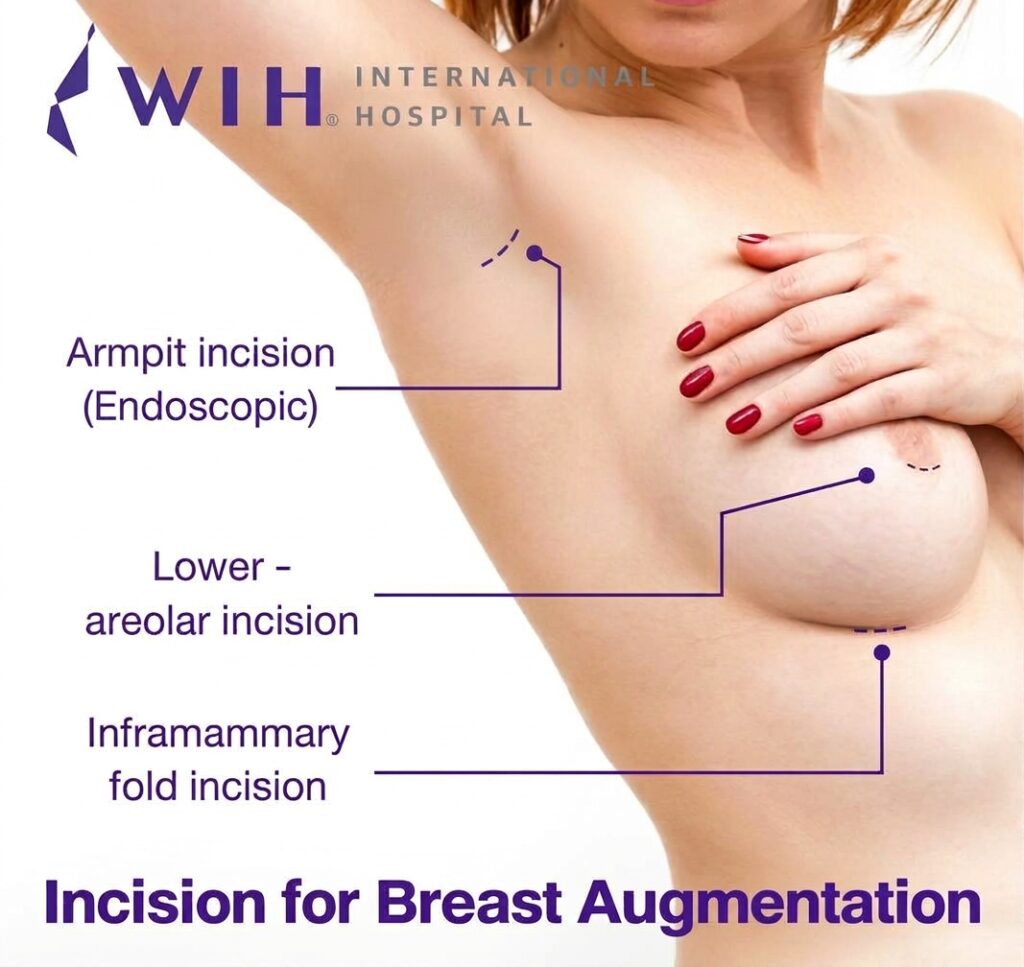
Choosing the Incision: Where Will the Scar Be?

Scar preference matters, but the incision must also provide suitable access for implant insertion, pocket dissection and any necessary fold adjustment.

ApproachScar locationMain considerations
InframammaryIn the crease beneath the breastDirect access for pocket creation and IMF control. Scar placement must account for the intended final fold.
Endoscopic transaxillaryIn the underarmAvoids an incision on the breast itself. Endoscopic visualization supports pocket dissection and controlled release.
PeriareolarAlong part of the areolar borderRequires suitable areolar dimensions. Smaller areolae may limit access for implant insertion.
Breast Augmentation Incision Options at WIH International Hospital

Breast Augmentation Incision Options at WIH International Hospital

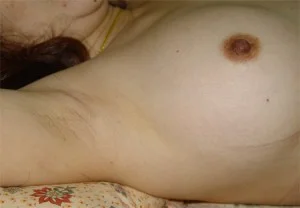
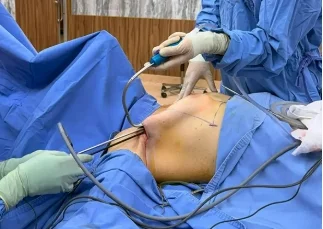
An underarm approach still leaves an underarm scar. Scar visibility varies with skin characteristics, healing and postoperative care.

Underarm scar at 1-year follow-up after breast augmentation.

Incision-for-Breast-Augmentation

This case demonstrates a well-faded underarm scar that is barely visible at the one-year follow-up after breast augmentation.

Above or Below the Muscle? Understanding Implant Placement

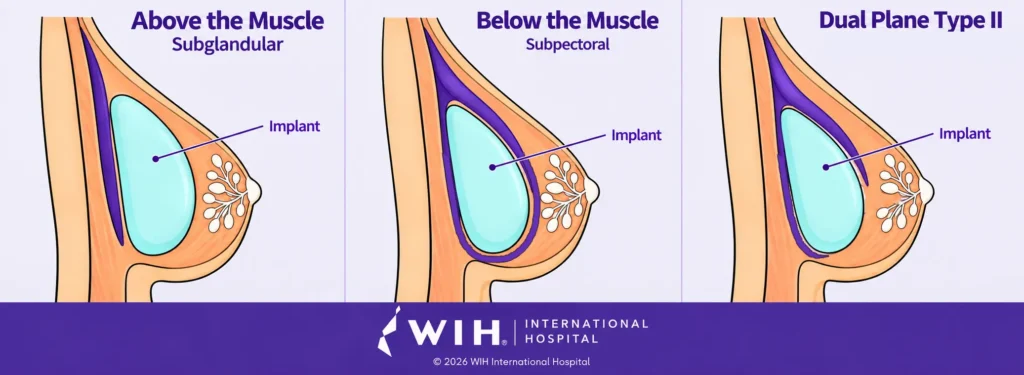
The implant plane describes which tissues cover the implant. It is selected according to breast tissue thickness, muscle characteristics, skin flexibility and the desired shape.

Subglandular and Subfascial Placement — Above the Muscle

Subglandular placement positions the implant beneath the breast tissue and above the pectoralis muscle. It may be suitable when existing tissue provides adequate coverage or when some degree of breast droop needs to be considered. Muscle-related implant movement is avoided, but thin coverage can make implant edges or rippling more visible.

Subfascial placement positions the implant just beneath the pectoral fascia, the layer between the breast tissue and the pectoralis muscle. Because this fascia is very thin, it adds no meaningful layer of coverage, so subfascial placement behaves much like subglandular placement in practice.

Subpectoral Placement — Beneath the Muscle

Subpectoral placement provides muscle coverage over part of the implant and is often considered when breast tissue is limited.

Planning must account for muscle tightness, implant projection and lower-pocket release. Muscle-related discomfort and animation are important considerations.

Dual-Plane Placement — Combining Coverage with Lower-Breast Expansion

Dual-plane augmentation combines upper muscle coverage with a lower implant portion beneath the breast tissue. Controlled release allows the lower breast to accommodate the implant.

Different modifications involve different amounts of tissue separation. The surgeon selects the appropriate modification according to the anatomy and planned contour.

Comparison of 3 breast implant placement planes: Above the Muscle (Subglandular), Below the Muscle (Subpectoral), and Dual Plane Type II, showing muscle coverage and implant positioning.

Comparison of 3 breast implant placement planes:
Above the Muscle (Subglandular), Below the Muscle (Subpectoral), and Dual Plane Type II, showing muscle coverage and implant positioning.

H2: Surgical Risks and Possible Complications

Gender-affirming surgery is a major operation and, like all surgery, carries potential risks. The type and likelihood of complications vary according to the selected surgical technique, individual health, anatomy, tissue condition, and postoperative care.

The following tables provide an overview of important complications that patients should understand before surgery. This is not an exhaustive list, and not every complication applies to every surgical technique. Some complications may require additional treatment or revision surgery.

External Genital, Wound, and Urinary Complications

No.Potential Complication
1Bleeding or Hematoma
2Skin-Flap or Reconstructed Genital-Tissue Necrosis
3Surgical-Site Infection or Abscess
4Urinary Retention or Difficulty Urinating
5Wound Dehiscence or Persistent Granulation Tissue

Vaginal Canal and Intra-abdominal Complications

No.Potential Complication
6Rectal Injury or Rectoneovaginal Fistula
7Neovaginal Stenosis, Shortening, or Loss of Depth
8Bowel Obstruction
9Bowel Anastomotic Leakage*
10Colon-Segment Prolapse Through the Vaginal Opening*

*Bowel anastomotic leakage and colon-segment prolapse are specifically associated with colon vaginoplasty. The complications relevant to each patient depend on the selected surgical technique.

Individual Risk Factors and Risk Reduction

The likelihood of complications is influenced by the patient’s overall health, anatomy, selected procedure, tissue condition, and adherence to preoperative and postoperative instructions.

Smoking, vaping, and other nicotine exposure can reduce tissue blood flow and increase the risks of delayed wound healing, infection, wound separation, and tissue necrosis. A higher body mass index may increase anesthetic, thromboembolic, wound-healing, and infection risks. For colon vaginoplasty, bowel health and other factors that may affect bowel healing must also be assessed carefully.

These risk factors do not mean that a complication will necessarily occur. Each patient receives an individualized preoperative assessment, and modifiable risks should be addressed before surgery whenever possible. Following wound-care and dilation instructions is also essential to protecting healing, vaginal depth, and the long-term surgical outcome.

Understand Possible Complications, Warning Signs, and Treatment

 link- https://www.wihhospital.com/gas-complications-bangkok-wih/

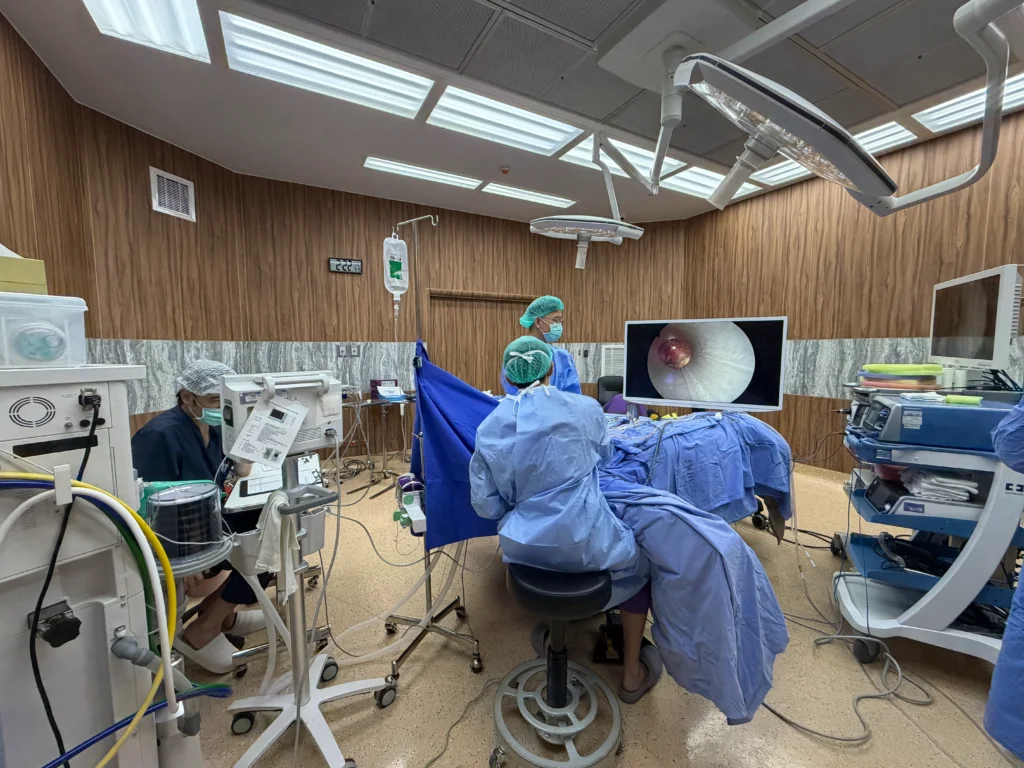
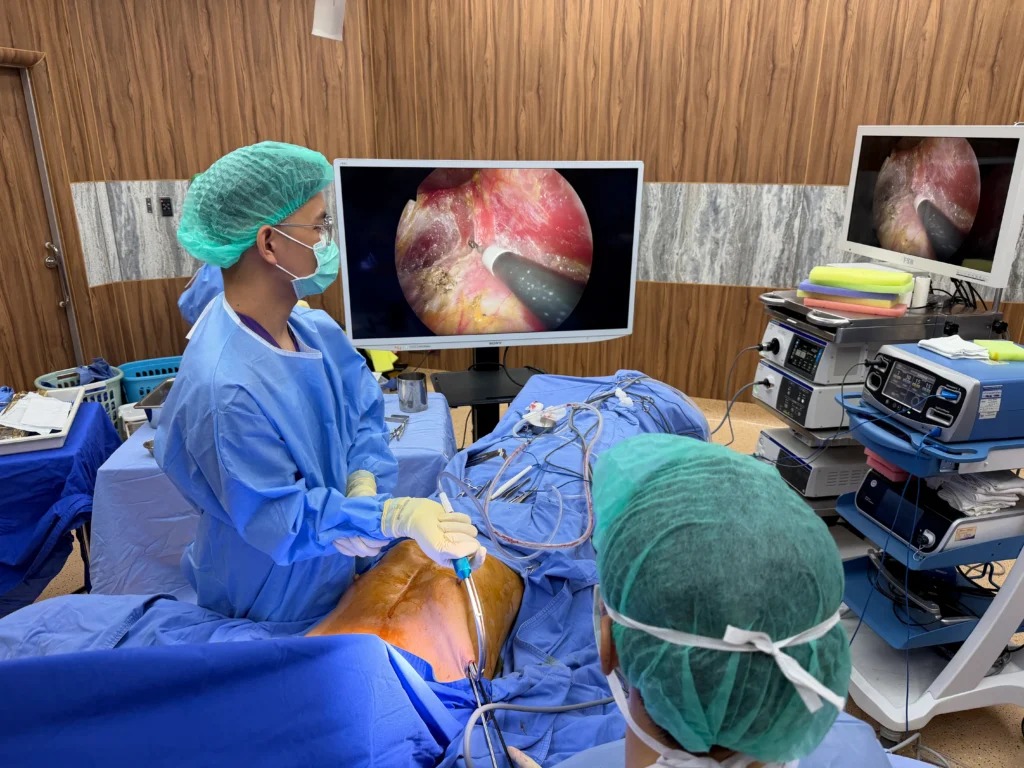
Endoscopic Transaxillary Breast Augmentation at WIH

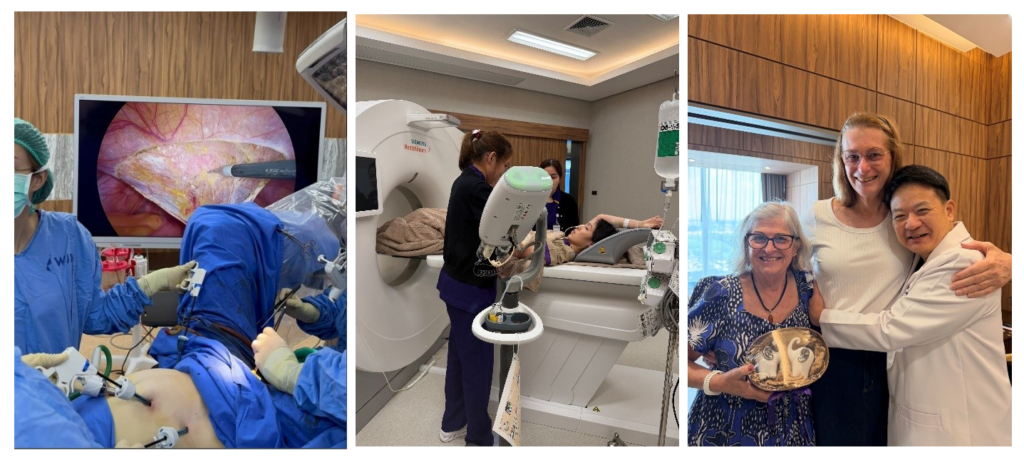
For suitable patients who prefer an incision away from the breast, WIH offers endoscopic transaxillary augmentation through an underarm incision.

An endoscope provides a clear view of the operative pocket on a monitor, allowing dissection under direct visualization, control of bleeding and precise adjustment of the lower and lateral pocket boundaries.

When the lower breast is tight or the inframammary fold needs lowering, controlled release creates additional lower-pole space so the implant can sit at the planned level within the expanded pocket.

Dual-Plane Options Through Endoscopic Access

The standard approach used at WIH generally creates a Dual Plane Type I pocket through controlled release of the inferior pectoralis attachment. Types II and III can also be performed when indicated, using additional endoscopic dissection between the breast tissue and the anterior surface of the pectoralis muscle.

This additional separation extends upward from the inframammary fold to the lower border of the areola for Type II, or to the upper border for Type III, according to the required tissue adaptation.

transgender-operation-surgery

The consultation considers anatomy, scar preference and surgical cost when choosing between endoscopic transaxillary and inframammary access.

Precise pocket creation establishes the implant’s position; tissue healing and pocket stability then influence how the final breast shape develops.

Why Patients Choose WIH

Choosing the right surgeon and hospital is one of the most important decisions in gender-affirming surgery.

At WIH International Hospital, Dr. Chettasak Tulayaphanich brings over 30 years of experience in gender-affirming surgery, supported by a dedicated multidisciplinary medical team. Our approach combines individualized surgical planning, advanced reconstructive techniques, and comprehensive postoperative care, with a focus on natural appearance, functional outcomes, preserved sensation, and patient safety.

Whether you are exploring your surgical options or ready to move forward, our team is here to guide you through consultation, surgical planning, and recovery.

Plan Your Surgery at WIH

Request a Personalized Consultation

Email: info@wihhospital.com
WhatsApp: +66 95 650 3892

Email WIH WhatsApp LINE

Pocket Stability and the Final Breast Shape

The inframammary fold and lateral pocket boundary help support the implant at the planned level and limit excessive downward or outward movement as tissues heal.

Swelling and muscle tension may initially make the implants appear high. The final breast shape can generally be appreciated around 3–6 months after surgery, as the implants settle into the lower poles and the inframammary folds become more clearly defined. The aim is for both breasts to have similar contours and fold levels, although individual anatomy and healing may leave some asymmetry.

Healing and Follow-Up

Follow-up assesses healing, implant position, symmetry and breast softness, including signs of capsular contracture such as increasing firmness, distortion or discomfort. Postoperative care is adjusted to support recovery and maintain the intended pocket boundaries.

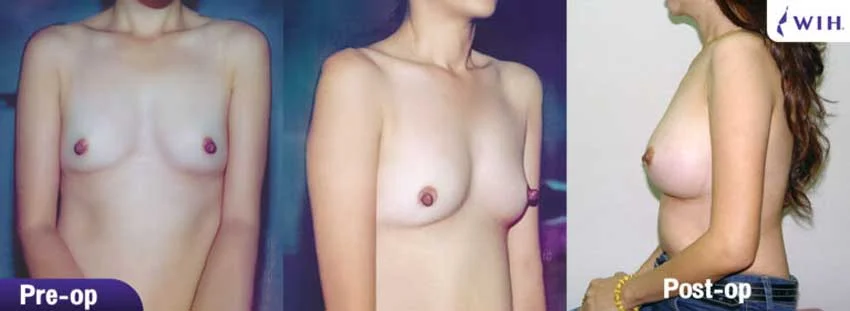
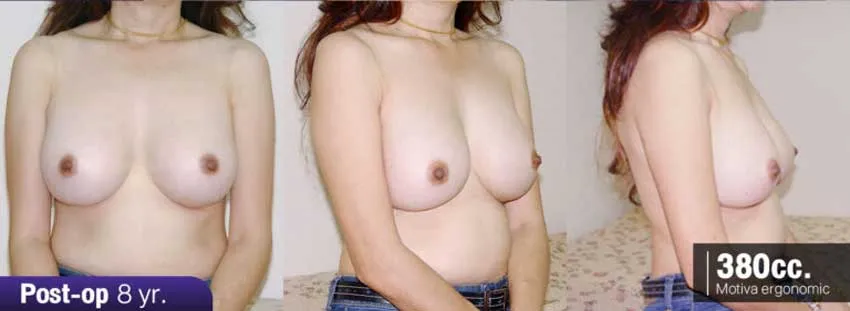
breast-augmentation-380cc-dr-chettasak-before-surgery

Before Surgery

breast-augmentation-380cc-dr-chettasak-after-surgery Post-op 8 years

After Surgery

Long-Term Breast Shape — Before Surgery and at 8-Year Follow-Up
Breast augmentation with 380 cc implants · Submuscular placement · Transaxillary (underarm) incision

How to Choose the Best Hospital for Transgender Breast Augmentation in Thailand

Choosing a hospital involves considering the surgeon’s experience with transgender breast anatomy, a clear explanation of surgical options and limitations, appropriate anesthesia and hospital support, and continuity of postoperative care.

Your consultation should address tissue coverage, chest proportions, nipple position and breast-fold planning. If you are considering revision surgery, it should also identify the existing problem and explain what correction can realistically achieve.

At WIH International Hospital in Bangkok, Thailand, our plastic surgery team provides individualized assessment and surgical planning, supported by coordinated hospital care and postoperative follow-up.

Whether you are considering your first breast augmentation or seeking revision of a previous result, contact the WIH team to discuss your goals, treatment options and recovery plan.

Request a Personalized Consultation

Email: info@wihhospital.com
WhatsApp: +66 95 650 3892

Request a Personalized Consultation

Email: info@wihhospital.com
WhatsApp: +66 95 650 3892

Email WIH WhatsApp LINE

Considering Revision Breast Surgery?

If you are concerned about a previous breast augmentation, the WIH surgical team can assess problems such as capsular contracture (breast firmness), asymmetry, bottoming out, high-riding implants, lateral displacement, symmastia (loss of separation between the breasts), or implant rupture.

Assessment focuses on identifying the underlying cause and discussing suitable corrective options, which may include implant exchange, capsule treatment or pocket reconstruction.

Breast implants are not lifetime devices. Your consultation also addresses surgical risks, implant-specific considerations and appropriate long-term follow-up.

Explore Revision Breast Surgery at WIH

Frequently Asked Questions About Gender-Affirming Surgery

WIH International Hospital offers Skin Graft Vaginoplasty, Laparoscopic Colon Vaginoplasty, Peritoneal Pull-Through (PPV) Vaginoplasty, Zero-Depth Vaginoplasty, and Orchiectomy. Each procedure is tailored to the patient’s anatomy, surgical goals, and individual needs.

The main difference is the tissue used to construct the vaginal lining. Skin Graft Vaginoplasty uses skin tissue, Colon Vaginoplasty uses a segment of the large intestine, and PPV uses peritoneal tissue. Each technique has distinct advantages, limitations, and postoperative considerations.

The most suitable technique depends on your anatomy, desired vaginal depth, lubrication preferences, medical history, and willingness to follow postoperative care. Dr. Chettasak will evaluate these factors during consultation and recommend an appropriate surgical approach.

Dr. Chettasak’s Non-Penile Inversion (NPI) Technique preserves penile and preputial skin for external genital reconstruction rather than using penile skin to line the vaginal canal. The technique focuses on natural external appearance, anatomical refinement, and preservation of erotic sensation.

Preserving erotic sensation is a major priority in Dr. Chettasak’s NPI Technique. The clitoris is reconstructed using sensate glans tissue while protecting its nerve supply. Many patients retain sexual sensation and can experience orgasm after recovery, although individual results vary and cannot be guaranteed.

The expected depth depends on the surgical technique, individual anatomy, and postoperative healing. At WIH, Skin Graft Vaginoplasty generally aims for a depth of at least 6 inches, PPV Vaginoplasty at least 6.5 inches, and Colon Vaginoplasty at least 7 inches. Long-term depth preservation also depends on appropriate postoperative care and dilation.

Yes. Regular vaginal dilation is essential after full-depth vaginoplasty to maintain vaginal depth and width, particularly during the first two years. WIH provides a structured dilation program with personalized instructions and ongoing guidance. Zero-Depth Vaginoplasty does not require vaginal canal dilation.

Breast implant-associated anaplastic large cell lymphoma (BIA-ALCL) is a rare lymphoma that develops in the fluid or scar capsule surrounding a breast implant. It is not breast cancer. The association is strongest with macrotextured implants, although cases have also been reported with microtextured implants. Risk varies between implant surfaces and products.

Motiva SmoothSilk implants, including Ergonomix2 used in the JOY program, are classified as smooth-surface implants, despite their fine surface microstructure. This classification should not be interpreted as a guarantee of zero risk.

Persistent swelling, a new lump or unexplained pain—particularly after the breasts have healed—should be assessed promptly. The WIH surgical team discusses implant-specific risks and long-term follow-up during consultation.

As with any major surgery, vaginoplasty carries risks such as bleeding, infection, wound separation, tissue necrosis, and urinary difficulties. Technique-specific complications may include vaginal narrowing, loss of depth, fistula formation, or intra-abdominal complications. Careful surgical planning, postoperative monitoring, and adherence to recovery instructions help reduce these risks.

The first step is to contact WIH via email, WhatsApp, or any of our social media channels to discuss your surgical goals, general health conditions, and available treatment options.
International patients can receive preliminary guidance and arrange an online consultation before arriving in Thailand or attend an in-person consultation at WIH. Our team will guide you through the necessary medical evaluations, documentation, surgery scheduling, and preparation for your journey.

Learn more: GAS Preparation Guide

Frequently Asked Questions

Breast massage is individualized rather than routinely recommended for every patient. Based on his clinical experience, Dr. Chettasak may recommend carefully directed massage for selected patients to help maintain breast softness and manage tissue tightness.

Some studies have reported lower rates of capsular contracture with postoperative exercises, although findings are inconsistent and largely involve older implants and techniques. Massage is therefore considered one part of postoperative care rather than a guaranteed method of prevention.

Patients with adequate tissue coverage and a stable pocket without excessive tightness may not need routine massage. The decision also considers implant design, placement and healing. When recommended, the WIH team demonstrates the timing and technique, with particular care to avoid overstretching the lower or lateral pocket.

The fundamental techniques are shared. Differences in tissue coverage, chest width, nipple position, muscle and breast-fold anatomy can change the plan. Individual assessment determines the approach.

Many transgender patients have limited breast tissue. Placing the implant partly beneath the pectoral muscle provides additional coverage and helps create a smoother upper-breast transition.

For patients with substantial existing breast tissue and mild sagging (ptosis), subglandular placement—above the muscle—may be considered. More pronounced ptosis may require a breast lift to achieve the intended shape.

The choice is individualized according to tissue coverage, muscle anatomy, nipple position and the degree of sagging.

Implant projection describes how far the implant extends forward from the chest. At WIH, selection considers implant volume together with breast-base width, tissue coverage, chest proportions and nipple spacing.

For implants below 400 cc, Moderate Plus (Mentor) or Demi (Motiva) profiles are often considered. For implants 400 cc or larger, High (Mentor) or Full (Motiva) profiles may be suitable, depending on the patient’s anatomy and desired fullness.

These are planning preferences rather than fixed rules. A wide chest or wide nipple spacing requires careful assessment of implant width as well as projection; a higher profile alone does not correct wide nipple spacing.

Yes. In appropriately selected patients, the transaxillary (underarm) approach can achieve a breast shape comparable to the inframammary (breast-fold) approach, while placing the scar in the underarm rather than on the breast.

Transaxillary augmentation accounts for approximately 80% of WIH’s breast augmentation cases, reflecting the team’s extensive experience with this technique, including endoscopic surgery.

A surgeon experienced in different incision approaches can explain their suitability and limitations while maintaining the same goals for breast shape and implant position. At WIH, incision selection considers your scar preferences, lifestyle and anatomy, rather than simply following the surgeon’s preferred approach.

The inframammary fold (IMF) defines the lower breast contour. WIH surgeons plan its position around implant dimensions, nipple position, tissue support and existing asymmetry, aiming for balanced lower-breast proportions and closely matched fold levels.

When lowering the IMF is necessary, controlled release and careful pocket creation accommodate the implant while preserving support. The lower and lateral pocket boundaries help limit bottoming out—excessive downward movement—and lateral displacement, or outward movement.

If an inframammary incision is chosen, the scar is planned to align with the intended new fold, where it can be better concealed. Support garments, individualized activity instructions and follow-up help protect the pocket as it heals. The contour and fold levels are generally assessed more reliably at 3–6 months, although healing varies and displacement can still occur.

Yes. At WIH, this is a common combination for patients seeking breast feminization alongside genital gender-affirming surgery. Both procedures can be performed during the same general anesthetic, with breast augmentation typically adding approximately 1–2 hours to the operation, depending on the technique. Complex revision cases may require longer.

The team assesses your health, total operating time and recovery needs before recommending combined or staged surgery.

Breast implant-associated anaplastic large cell lymphoma (BIA-ALCL) is a rare lymphoma that develops in the fluid or scar capsule surrounding a breast implant. It is not breast cancer. The association is strongest with macrotextured implants, although cases have also been reported with microtextured implants. Risk varies between implant surfaces and products.

Motiva SmoothSilk implants, including Ergonomix2 used in the JOY program, are classified as smooth-surface implants, despite their fine surface microstructure. This classification should not be interpreted as a guarantee of zero risk.

Persistent swelling, a new lump or unexplained pain—particularly after the breasts have healed—should be assessed promptly. The WIH surgical team discusses implant-specific risks and long-term follow-up during consultation.

Cost depends on the implant, approach, equipment, corrective work and care arrangements. WIH provides a personalized quotation identifying the proposed procedure and what is included.